

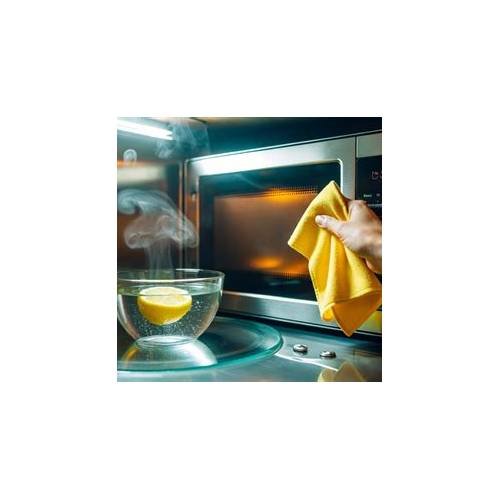
When a microwave has splatters, dried food, or an unpleasant smell, two simple water-based methods can help: steaming the interior first or wiping it directly with a damp cloth. Both can clean a microwave without harsh chemicals, but they work differently.
Steam cleaning is usually better for loosening stubborn food and softening grease. Wiping is faster for fresh spills, light daily messes, and the final removal of residue. In many cases, the most effective approach is to use both: steam to loosen the mess, then wipe it away.
Water steam cleaning vs. wiping a microwave: the main difference
Steam cleaning uses heated water to create moisture inside the microwave. The warm steam condenses on the walls, ceiling, and floor of the appliance, helping soften dried food and greasy splatters. Afterward, you wipe away the loosened residue.
Wiping uses a damp microfiber cloth or soft sponge to remove dirt directly. It does not rely on heat or condensation, so it works best when the food is still fresh or the microwave only needs light maintenance.
| Method | Works best for | Main advantage | Main limitation |
|---|---|---|---|
| Steam cleaning | Dried food, greasy splatters, and odors | Loosens residue before wiping | Requires heating water and handling hot steam |
| Damp wiping | Fresh spills and routine cleaning | Quick and simple | May struggle with hardened or baked-on food |
| Steam followed by wiping | Most general cleaning jobs | Combines softening and removal | Takes longer than wiping alone |
When steam cleaning works best
Steam is the stronger choice when food has dried onto the microwave’s interior. Rice, sauce, oatmeal, soup, and other splashes can harden quickly, especially on the ceiling or around the turntable. Trying to scrub these spots immediately can take more effort and may spread the mess.
Steam can also help with greasy films and lingering food odors. Moist heat softens some residue, making it easier to lift with a cloth. However, water steam is not a substitute for removing heavy grease with an appropriate cleaner. If a greasy film remains after steaming, use a small amount of mild dish soap on a damp cloth, then wipe again with clean water.
How to steam clean a microwave with water
- Remove the turntable and any removable support ring. Wash these separately with warm, soapy water if needed.
- Place a microwave-safe bowl or measuring jug containing water inside the microwave. Do not use a sealed container.
- Heat the water until it produces substantial steam. The exact time depends on the microwave and the amount of water, so follow the appliance’s instructions and use care.
- Leave the door closed for several minutes after heating. This gives the steam time to condense and soften residue. A common cleaning routine may take about 5 to 7 minutes of heating and resting combined, but the water and container can become very hot.
- Open the door carefully, keeping your face and hands away from the escaping steam.
- Wipe the ceiling, walls, floor, and inside of the door with a clean microfiber cloth or soft sponge.
- Dry the interior and replace the clean turntable and support ring.
For a water-only approach, see this guide to steam cleaning a microwave using only water. It explains the basic process without requiring vinegar or other ingredients.
When wiping with water is the better choice
Direct wiping is usually enough for a microwave that is cleaned frequently. If a small amount of food has just splashed onto the wall, wipe it before it dries. A damp cloth can remove the residue quickly without heating water or waiting for steam.
Wiping is also preferable in situations where you should avoid adding heat or moisture. For example, do not use the steam method if the microwave has an electrical fault, visible damage, or a door that does not close correctly. Address appliance problems first, and follow the manufacturer’s cleaning instructions.
How to wipe a microwave safely
- Turn off and unplug the microwave before cleaning the interior when practical, especially if you will use a wet cloth.
- Remove the turntable and support ring.
- Dampen a soft cloth with water. It should be wet enough to clean but not dripping.
- Wipe the interior walls, ceiling, floor, and door. Avoid forcing moisture into vents, openings, the control panel, or the door latch.
- For stuck-on food, hold the damp cloth over the spot for a short time to soften it. Do not use a knife, steel wool, or an abrasive pad.
- Wipe with a second clean, damp cloth if residue remains, then dry the surfaces.
Fresh spills are easiest to remove while they are still soft. A quick wipe after cooking can prevent food from drying and reduce the need for more intensive cleaning later.
Which method removes dried food better?
For dried food, steam cleaning generally works better than wiping with cold water alone. The warm moisture helps rehydrate residue, while the closed microwave keeps the interior damp for several minutes. This reduces the amount of rubbing needed.
Steam does not always remove every mark. Burnt stains, thick grease, and residue that has been repeatedly heated may need more than water. Steam the microwave first, then use a soft cloth with a little mild dish soap if the manufacturer allows it. Never scrape aggressively, because damaged interior coatings can make future cleaning more difficult.
If dried food is the main problem, this step-by-step guide explains how to remove dried food from a microwave with water.
Which method is better for grease and odors?
Steam is usually more useful than direct wiping for light grease and food odors because it loosens residue in areas that are difficult to reach by hand. The ceiling, corners, and gaps around the turntable can collect splashes that are easy to overlook.
After steaming, wipe all interior surfaces thoroughly. Leaving softened grease behind can allow the smell to return. If an odor remains, clean the turntable, support ring, and inside of the door as well. These parts may hold food particles even when the main interior looks clean.
Water alone may not remove strong odors caused by burnt food or heavy grease. For more targeted help, see this guide to removing bad microwave smells with water.
Can you use only water to steam clean a microwave?
Yes. Plain water can create steam and soften many common food splatters. You do not need to add vinegar, lemon, or a commercial product for the basic steaming process.
Water-only cleaning is a good option when you want to avoid added fragrances or ingredients. It is also less likely to leave an additional residue. However, water is not a strong degreaser, so stubborn oily buildup may still require a small amount of mild dish soap on a cloth after steaming.
If you prefer not to use vinegar, follow this guide to cleaning a microwave with water without vinegar.
Safety precautions for both cleaning methods
- Use only a microwave-safe, heat-resistant container for steaming.
- Never heat a sealed container, because pressure can build up.
- Do not heat water in an empty microwave or operate the appliance without an appropriate load.
- Handle the bowl, water, and steam carefully. Water can be hotter than it appears and may cause burns.
- Do not put metal scrubbers, metal containers, or unsuitable utensils inside the microwave.
- Do not spray water or cleaner directly into vents, controls, or openings.
- Avoid abrasive powders, scouring pads, and sharp tools that can damage interior surfaces.
- Stop using the microwave if the door, seal, interior coating, or electrical components appear damaged.
The best routine: steam first, wipe second
For most households, the best answer to the water steam cleaning versus wiping question is not either-or. Use wiping for daily maintenance and steam cleaning when residue has dried or odors have developed.
A practical routine is to wipe fresh spills as soon as the microwave cools. Once a week, or whenever buildup appears, steam the interior with water and then wipe it completely. Remove and wash the turntable and support ring separately, and leave the door open briefly so the interior can dry.
This combination uses steam where it is most helpful and avoids unnecessary heating for small messes. It also limits scrubbing, which helps protect the microwave’s interior finish.
Frequently asked questions
Is steam cleaning safer than wiping a microwave?
Both methods can be safe when performed correctly. Wiping involves less heat and is the simpler option for small spills. Steam cleaning adds a burn risk because the container and vapor become hot, so use a microwave-safe container, allow a resting period, and open the door carefully.
How long should water sit in a microwave for steam cleaning?
The required time varies with the microwave, water volume, and container. Heat the water until it produces steam, then leave the door closed for several minutes. Do not rely on a fixed time if the manufacturer gives different instructions, and never handle the container immediately without protection.
Can wiping remove burnt microwave stains?
Wiping may remove loose residue, but burnt stains are often difficult to remove with water alone. Steam first to soften the surface, then wipe gently. Avoid abrasive tools and harsh scrubbing, which can damage the interior coating.
Should I clean the microwave ceiling?
Yes. The ceiling often collects splatters and grease, even though it is easy to overlook. Steam can be particularly helpful there, but make sure your cloth is not dripping and do not allow water to enter vents or openings.
How often should I steam clean a microwave?
There is no single schedule for every kitchen. Wipe fresh spills promptly and steam clean whenever food has dried, grease has accumulated, or an odor remains after ordinary wiping. A microwave used daily may need this deeper routine more often than one used occasionally.
Conclusion
Steam cleaning is the better choice for dried food, light grease, and odors because warm moisture loosens residue before you wipe. Direct wiping is faster and more convenient for fresh spills and routine maintenance. For the most effective water-based microwave cleaning, steam the interior when needed and always finish by wiping away the softened dirt.
