

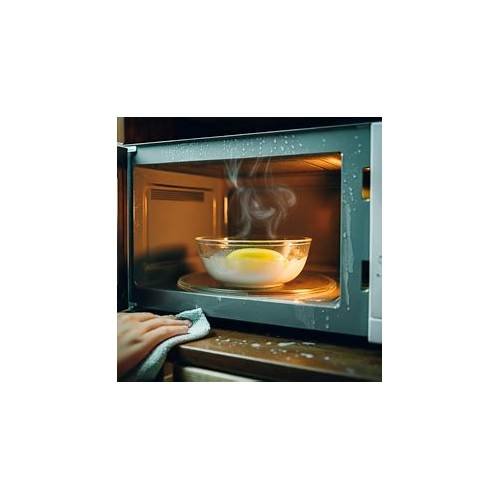
Dried food stuck inside a microwave can look difficult to clean, but you usually do not need harsh chemicals or heavy scrubbing. Water and heat can soften baked-on splatters, sauce, grease, and crumbs so they are easier to wipe away.
The basic method is simple: heat water in a microwave-safe bowl, let the steam sit inside the appliance, then wipe the loosened food with a soft cloth or sponge. For especially stubborn spots, repeat the process rather than scraping hard. This helps protect the microwave’s interior and makes cleaning more manageable.
What you will need
- A microwave-safe glass or ceramic bowl
- Water
- A soft microfiber cloth or clean towel
- A non-abrasive sponge
- Oven mitts or a thick dry towel
- A small amount of mild dish soap, if needed for greasy residue
Use a bowl that is clearly labeled microwave-safe and large enough to hold the water without spilling. Do not use metal containers, metal-trimmed dishes, or unsuitable plastic containers. If you are unsure how much water to use, this guide to how much water you need to clean a microwave explains the general considerations.
How to remove dried food from a microwave with water
1. Remove loose crumbs and removable parts
Before adding water, take out the glass turntable and its support ring if the manufacturer’s instructions allow it. Remove loose crumbs by hand or with a dry paper towel. Getting rid of loose debris first prevents it from becoming wet and spreading across the microwave’s floor.
Wash the turntable separately with warm water and mild dish soap. Let it cool completely before washing if it has recently been used. Avoid placing a hot glass turntable under cold water, since a sudden temperature change may damage it.
2. Add water to a microwave-safe bowl
Pour water into the bowl, leaving enough space at the top to reduce the chance of splashing or boiling over. A modest amount is generally sufficient for creating steam; the bowl does not need to be full.
Place the bowl in the center of the microwave. Make sure the microwave is empty apart from the bowl and that no utensils, foil, twist ties, or other metal objects are inside.
3. Heat the water to create steam
Heat the water until the inside of the microwave becomes steamy. The exact time depends on the amount of water, the power of the appliance, and its instructions, so use a short heating period and check carefully. The goal is to produce steam, not to boil the water aggressively or let the bowl run dry.
Never operate a microwave with no food or liquid inside. Stay nearby while the water heats and follow the appliance manufacturer’s guidance. Water can become very hot, and it may not always look like it is boiling before it is moved.
4. Let the steam work on the dried food
When the heating cycle ends, leave the microwave door closed for several minutes. This gives the warm moisture time to soften dried food and loosen splatters from the interior walls, ceiling, and floor.
Do not reach into the microwave immediately. The bowl, water, and built-up steam may be hot. Open the door carefully and keep your face and hands away from the escaping steam. Use oven mitts or a dry towel to remove the bowl.
5. Wipe the inside while it is still damp
Use a soft microfiber cloth or non-abrasive sponge to wipe the interior. Start with the ceiling and upper walls, then clean the sides, floor, and inside of the door. Working from top to bottom helps keep loosened moisture and food residue from falling onto areas you have already cleaned.
Most softened food should come away with light pressure. Rinse or wring the cloth as it becomes dirty, then continue wiping with a clean section. A damp cloth is usually more effective than a dripping one because excess water can collect around the door, controls, or vents.
6. Treat remaining spots with another round of steam
Some dried food, particularly thick sauces or cooked-on starch, may not lift after one cycle. Instead of using a knife or abrasive scrubber, repeat the water-steam process. You can also hold a warm, damp cloth over a cooled stubborn spot for a short time to help soften it before wiping.
If a greasy film remains, put a small amount of mild dish soap on a damp cloth rather than applying soap directly inside the microwave. Wipe the residue, then use a separate clean damp cloth to remove any soap. Finish with a dry towel.
For a more general water-based routine, see this step-by-step guide on how to clean a microwave with water. If you are specifically dealing with black or discolored marks, the approach in how to clean burnt microwave stains using water may be more relevant.
How to clean difficult areas inside the microwave
The microwave ceiling
Food often dries on the ceiling when liquids splatter during heating. Use a well-wrung cloth so water does not drip into openings or controls. Wipe gently after steaming, and repeat the process if residue remains.
The inside of the door
Clean the glass and surrounding frame with a damp cloth. Pay attention to the edges where sauce and grease can collect. Do not flood the door or spray cleaner into the vents, seams, latch area, or control panel.
The floor and turntable area
Remove the turntable and support ring before wiping the microwave floor. Food underneath the turntable can dry into a hard ring, but steam should loosen it. Wipe around the center spindle carefully and make sure the area is dry before replacing the parts.
Air vents and openings
Use only a lightly damp cloth around vents and openings. Do not push a wet sponge into them or pour water inside the appliance. If food has entered an opening, unplug the microwave and consult the manufacturer’s instructions or a qualified technician rather than trying to force it out.
What not to do when removing dried food
- Do not use metal scrapers, knives, or steel wool. They can scratch the interior or damage the microwave’s protective coating.
- Do not spray water or cleaner directly into the microwave. Liquid can reach electrical components, vents, or the control panel.
- Do not run the bowl dry. Stop the cycle if the water has evaporated or the bowl appears empty.
- Do not touch hot steam or the heated bowl with bare hands. Allow the appliance to cool and use oven mitts.
- Do not use abrasive powders or rough scouring pads unless the microwave manufacturer specifically allows them.
- Do not force the turntable or support ring. Clean and replace each part according to the appliance instructions.
How to tell whether the microwave is clean
After wiping, inspect the ceiling, walls, floor, door, and area beneath the turntable. The surfaces should be free of visible food and should not feel sticky when touched with a clean, damp cloth. If you still see a hard patch, steam the area again instead of applying more pressure.
Once the food is removed, wipe the interior with a clean, slightly damp cloth and dry it with a towel. Leave the door open for a short time so remaining moisture can evaporate, provided the microwave is in a safe position and will not be disturbed.
How to prevent dried food from building up
Cover bowls and plates with a microwave-safe cover or a suitable loose covering when reheating foods that may splatter. Leave room for steam to escape and follow the instructions for the cover. Avoid sealing containers tightly.
Wipe fresh splashes as soon as the microwave has cooled. Fresh residue is much easier to remove than food that has been reheated and dried several times. A quick wipe after messy meals can also reduce odors and prevent buildup around the turntable.
Do not overfill containers, and use a lower heating setting or shorter intervals when food tends to boil over. Stirring between intervals can also help heat food more evenly, when appropriate for the dish.
Frequently asked questions
Can water alone remove dried food from a microwave?
Water alone can loosen many dried food deposits by creating steam. It may not remove every greasy or heavily burned mark in one cycle, so repeat steaming and gentle wiping may be necessary. A small amount of mild dish soap on a damp cloth can help with leftover grease.
How long should water sit in the microwave?
After heating, keep the door closed for several minutes so steam can soften the residue. The exact heating and resting time depends on the appliance and amount of water. Follow the microwave’s instructions and avoid overheating the bowl or allowing the water to evaporate completely.
Can I use a sponge to clean dried food?
Yes, use a soft, non-abrasive sponge after steaming the microwave. Avoid rough scouring pads, steel wool, and abrasive tools because they can scratch the interior.
What if the dried food still will not come off?
Run another water-steam cycle and let the microwave rest with the door closed again. Then wipe the spot with a warm, damp cloth. If the surface appears damaged, chipped, or discolored in a way that does not look like food residue, stop scrubbing and check the manufacturer’s care instructions.
Should I clean the microwave while it is plugged in?
Keep water away from electrical openings, vents, the control panel, and the door seams. For routine interior wiping, follow the manufacturer’s instructions. If you need to clean near electrical components or notice damage, unplug the microwave first and seek professional guidance when necessary.
Using water and steam is a gentle way to deal with dried food inside a microwave. Heat the water safely, allow the steam time to soften the residue, and wipe with a soft cloth. Repeating these steps is safer and usually more effective than scraping hardened food from the surface.
