

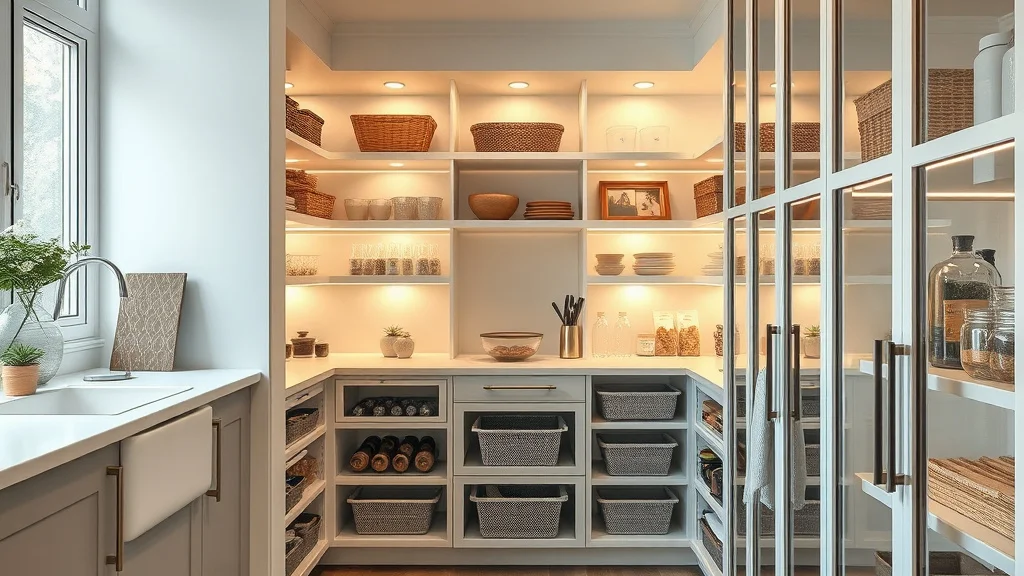
In today’s fast-paced world, an organized kitchen is no longer a luxury but a necessity, especially if you’re someone who loves to cook or entertain. A walk-in pantry is an optimal solution for maximizing the efficiency and aesthetics of your kitchen. Catering to both small and large kitchens, a walk-in pantry elevates the organization game by providing ample space to systematically arrange both dry goods and bulky kitchenware. This article dives into the most innovative ideas to help you create a seamless, functional pantry that caters to your aesthetic desires and spatial constraints. We’ll explore various storage solutions that offer both simplicity and sophistication in structuring your walk-in pantry.
Categorize to Maximize Space
One of the primary goals of any pantry is to make the most of the available space. A fundamental strategy is categorizing your items. This involves grouping similar types of products together, ensuring both easy retrieval and efficient use of the available space.
- Food Categories: Divide your pantry into sections, such as baking essentials, snacks, canned goods, grains, and spices.
- Non-Food Categories: Create dedicated areas for kitchen gadgets, cleaning supplies, and reusable containers.
By organizing your pantry into distinct zones, retrieval becomes a straightforward task, and maintaining order overtime is significantly easier.
Utilize Vertical Space
Making use of the vertical space in a walk-in pantry prevents clutter and optimizes room for storage. Tall shelving units are perfect for storing items like baking sheets and cutting boards vertically.
- Adjustable Shelves: These provide flexibility, allowing you to alter spacing between shelves based on your current needs.
- Overhead Storage: Utilize the top shelves for seasonal items or rarely used cookware, taking advantage of your pantry’s height.
This approach not only increases your storage space but also keeps frequently used items at eye level for quick access.
Types of Pantry Storage Options
Choosing the right type of storage option depends on your specific needs and space constraints. Below, we’ve listed two primary categories of walk-in pantry storage: Built-In Systems and Modular Storage.
| Aspect | Built-In Systems | Modular Storage |
|---|---|---|
| Cost | Higher | Varies, generally lower |
| Customization | Highly Customizable | Flexible, limited by module types |
| Installation | Professionally Installed | DIY-Friendly |
| Adjustability | Fixed Modifications | Highly Adjustable |
Implement Drawer Systems
Installing drawer systems in your walk-in pantry brings a streamlined look and effectively utilizes the depth of your storage space. Drawers enable easy access to items stored at the back of shelves without requiring you to rearrange other contents.
- Pull-Out Drawers: These are perfect for storing smaller kitchen items such as utensils and kitchen linens.
- Clear Drawer Bins: Transparent options make it easier to locate products at a glance.
This clever use of drawer systems can also offer high storage capacity without compromising accessibility or design.
Optimizing Shelf Liners
Shelf liners protect your pantry shelves from spills and contribute to an organized aesthetic. They also prevent items from sliding and provide a stable surface for storage.
- Easy-to-Clean Materials: Opt for liners that are waterproof and easy to wipe down, promoting hygiene.
- Non-Adhesive Options: Choose non-permanent liners that can be rearranged or replaced as needed.
Lining shelves not only enhances functionality but also gives your pantry a polished and tailored look.
Integrate Clear Storage Containers
Using clear storage containers allows you to see exactly what’s inside, making retrieval and restocking a breeze. Select containers that harmonize with the overall design and effectively utilize shelf space.
- Label Everything: Use simple, readable labels to identify contents immediately, even in clear containers.
- Air-Tight Seals: Ensure freshness of ingredients such as flour, sugar, and snacks by using containers with air-tight lids.
Clear containers not only keep your pantry items readily visible but also present a tidy and cohesive arrangement.
Consider Built-In Wine Storage
For wine enthusiasts, dedicating a section of the walk-in pantry for wine storage can be both practical and elegant. Built-in wine racks provide an attractive and space-efficient method for storing your collection.
- Temperature Control: Ensure your chosen area maintains a suitable temperature for wine preservation.
- Accessibility: Arrange bottles for easy access, taking care to separate whites from reds if necessary.
Incorporating wine storage into your pantry adds a personal touch, especially for those who frequently entertain guests.
Employ Door Storage Solutions
The back of your pantry door offers underutilized storage potential. Various door-mounted storage solutions can free up shelf and floor space by accommodating smaller items. Check prices on Amazon
- Door Racks: Perfect for spices, sauces, and other small but frequently used items.
- Hooks and Pegboards: Add hooks or small pegboards for hanging items like aprons, kitchen shears, or measuring spoons.
These additional storage options can significantly enhance the functionality of your pantry without compromising accessibility to key items.
Integrate Lighting Solutions
Effective lighting in a walk-in pantry is key in creating a welcoming and functional space. It enhances visibility and spotlights particular areas or features you want to emphasize.
- Under-Shelf Lighting: Highlights specific zones or shelves and is excellent for detail-focused work.
- Motion-Sensor Lights: Efficiently brighten your pantry as you enter, saving energy by turning off when not in use.
Strategically placed lighting not only elevates the look of your pantry but also ensures a safe and efficient workspace.
Frequently Asked Questions
How can I add more storage space to a small walk-in pantry?
Opt for vertical storage solutions, such as overhead shelving and tall storage units, to maximize space in smaller pantries.
What are the best materials for pantry shelves?
Choose sturdy materials like solid wood, metal, or high-quality laminate that can support heavy loads and resist wear over time.
How do I keep my pantry organized over the long term?
Regularly reassess and declutter contents, ensuring items return to designated zones after use to maintain order.
Can I use my walk-in pantry for appliances?
Yes, allocate a section for small appliances to free up counter space. Ensure that they have nearby outlets for convenience.
How can I maintain appropriate humidity levels in my pantry?
Installing a dehumidifier or using moisture-absorbing containers can help control humidity and preserve food longer.
Is a walk-in pantry suitable for my kitchen?
If space permits, a walk-in pantry can improve your kitchen’s organization and aesthetics, regardless of size.
Are there any safety concerns with pantry storage?
Keep heavy items on lower shelves and store breakable items safely to avoid accidents.
Should I professionally install my pantry system?
For built-in systems, professional installation ensures quality and functionality. However, modular solutions may be handled as a DIY project.
Final Thoughts
A walk-in pantry is a transformative addition to any kitchen, enhancing functionality, organization, and aesthetic appeal. The key to an effective pantry is employing a strategic mix of storage solutions that cater to your specific needs. By carefully considering each aspect—from categorizing items to selecting containers and lighting—your pantry can become more than just a storage space. It can be a beautifully crafted, smoothly operating area that meets your needs with style and ease. Whether small or expansive, a thoughtfully organized walk-in pantry can truly redefine your culinary space.
