

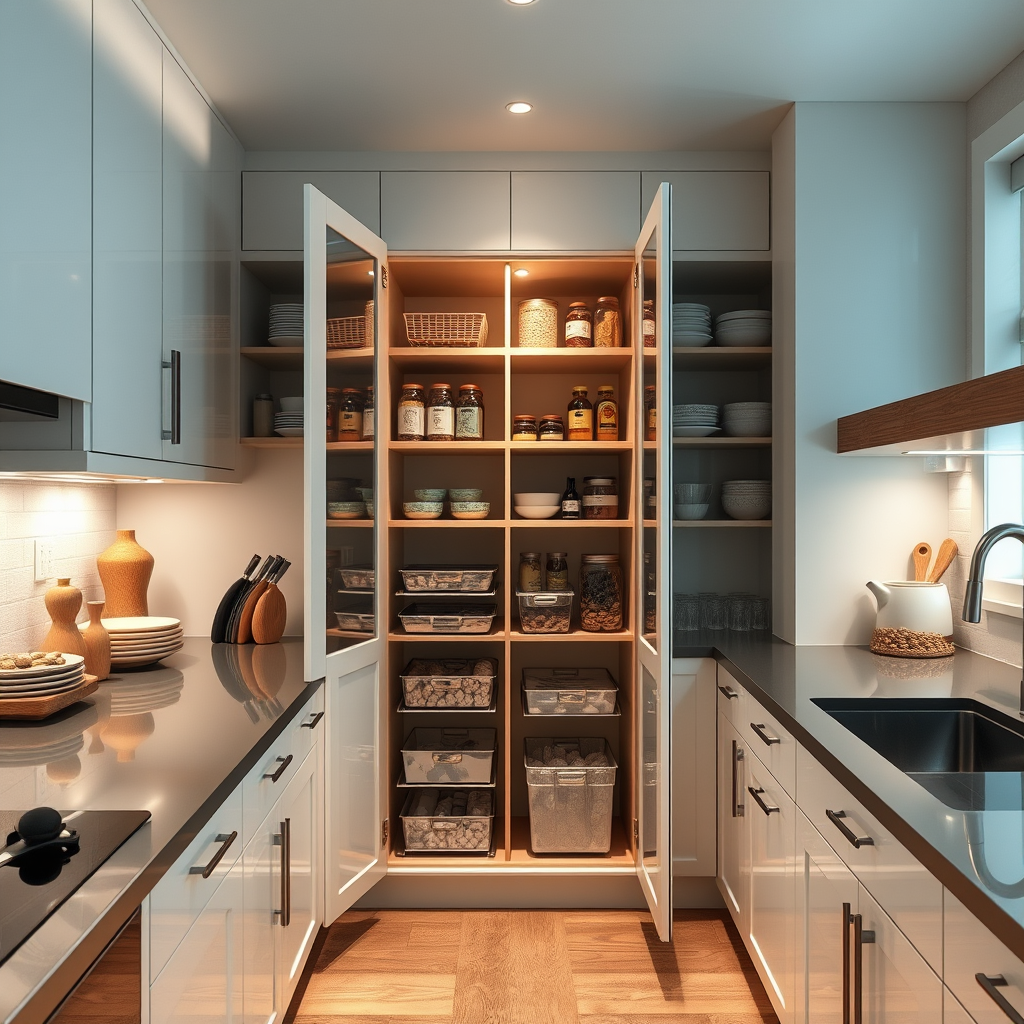
In the hustle and bustle of daily cooking, a well-organized pantry can be a game-changer. A clutter-free and strategically arranged kitchen pantry not only saves time but also makes meal preparation a seamless and more enjoyable experience. No matter the size of your kitchen, there are innovative storage solutions that can help make better use of your pantry space. From pull-out shelves to lazy Susans, there are plenty of options to consider that will cater to your specific needs. This article will delve into various pantry cabinet storage ideas, providing you with insightful advice to transform your cooking space into a haven of efficiency and order. Let’s explore an assortment of strategies and products that will make your kitchen pantry an epitome of organization.
Optimize Vertical Space
Maximizing vertical space is one of the simplest and most effective ways to organize your kitchen pantry. Often, shelves have unutilized space above the items we store. By adding a tier system or adjustable shelves, you can make the most of this underutilized area. Tall containers can accommodate items like spaghetti or cereal, and stacking helps you see and access items more efficiently. Consider the following ideas:
- Use shelf risers to create extra layers within a shelf.
- Stack bins and baskets vertically to maximize space.
- Install adjustable shelving to tailor the storage space according to your needs.
Incorporate Pull-Out Drawers
Pull-out drawers add tremendous value to pantry storage by improving access and visibility. These drawers slide out smoothly, allowing you to reach items stored in the back without knocking over what’s in front. They are ideal for storing canned goods, sauces, and baking supplies. The versatility they offer within a pantry is unparalleled.
- Consider installing wire or wooden pull-out drawers for easy access.
- Opt for soft-close mechanisms to prevent banging.
- Labeling the front of each drawer can help maintain organization.
Lazy Susans for Easy Access
Lazy Susans are a time-tested solution for maximizing corner spaces and hard-to-reach areas in your pantry. These rotating trays allow you to easily access all stored items by simply spinning the platform. Perfect for storing spices, sauces, and smaller bottles, Lazy Susans prevent items from getting lost in the depths of your pantry corners.
- Use a tiered Lazy Susan for storing small snack items or condiments.
- Install a Lazy Susan with a raised edge to prevent items from falling off.
- Choose a non-skid surface to keep items in place as it spins.
| Option | Features | Ideal For | Pros | Cons |
|---|---|---|---|---|
| Fixed Shelving | Non-movable, sturdy | Bulk item storage, stable items | Efficient for heavy items, no installation required | Less flexibility, can’t adjust for different item sizes |
| Adjustable Shelving | Movable, customizable height | Various item sizes, evolving storage needs | Customizable, flexible for numerous items | Requires installation, may reduce sturdiness over time |
Baskets and Bins for Grouping Items
Using baskets and bins can completely revolutionize your pantry organization. Grouping similar items into categorized bins allows for better organization and easier retrieval. When everything has its own place, maintaining order becomes less strenuous.
- Label each basket or bin for items like snacks, grains, and baking supplies.
- Use clear bins for transparency and easy visibility of contents.
- Choose stackable bins to maximize vertical space.
Use Mason Jars and Clear Containers
Clear containers and mason jars offer an aesthetic and practical storage solution, providing visibility and airtight storage to keep your ingredients fresh. By pouring pantry staples like pasta, rice, and flour into these containers, not only do you enhance your pantry’s appearance but also reduce packaging mess.
- Choose uniform-sized containers for symmetry and stacking.
- Label jars with contents and expiry dates.
- Opt for airtight jars to keep ingredients fresh longer.
Labeling for Clarity
Labeling is an essential aspect of pantry organization that often goes overlooked. Clear labeling provides users with quick recognition of items and ensures that everything is returned to its rightful place. This prevents clutter and promotes consistent organization.
- Use chalkboard labels for easy content changeover.
- Color-code labels for different categories like baking, snacks, and canned goods.
- Employ technology with QR codes for detailed ingredient information.
The Role of Racks and Hooks
Racks and hooks can turn the front and sides of pantry doors into valuable storage spaces. They offer a practical way to store smaller items, minimizing clutter on shelves and maximizing pantry utility.
- Install over-the-door racks for storing spices and oils.
- Use hooks for hanging items such as aprons or reusable shopping bags.
- Consider magnetic strips for metal spice jars or utensils.
Integrating Technology
With the rise of smart kitchens, integrating technologies such as inventory-tracking apps or smart shelves can help manage pantry stock levels, reducing waste and ensuring continuous supply.
- Use apps to track the expiration dates of perishable items.
- Install smart shelves that alert when stocks are low.
- Implement voice assistant integration to add missing items to your shopping list.
Loading Heavy Items at the Bottom
Placing heavy items like pots, larger cereal boxes, and bulk storage containers on the lower shelves of a pantry is both safe and practical. This arrangement prevents accidents and makes it easier to lift and remove large items. Check prices on Amazon
- Arrange larger containers at the bottom for easier lifting.
- Place frequently used weighty items within easy reach.
- Utilize corner spaces for storing oversized items.
Regular Cleaning and Maintenance
Regular cleaning and maintenance of your pantry ensure long-term organization. A well-kept pantry minimizes the risk of pest infestations and organizes your grocery purchasing and meal planning.
- Set a monthly schedule to sort expired items and replenish.
- Wipe down shelves and containers to maintain hygiene.
- Reevaluate storage solutions periodically to accommodate changing needs.
Frequently Asked Questions
What is the best way to organize a small pantry?
Utilize vertical space with stackable containers and baskets, and consider pull-out shelves or drawers to make access easier. Keep items categorized, and use the pantry door to hang racks or additional shelving.
How can I keep my pantry pest-free?
Ensure containers are airtight to prevent pests. Regular cleaning, removing expired foods, and occasionally inspecting for signs of pests will help keep your pantry pest-free.
What should not be stored in a pantry?
Avoid storing items that are temperature-sensitive or require refrigeration. Additionally, be cautious of strong-smelling substances as they can affect nearby food items.
Is it necessary to label everything in the pantry?
Labeling is not mandatory, but it helps in maintaining order and ease of access. It ensures that everyone in the household understands where items belong and helps quickly identify their contents.
How often should I clean my pantry?
A thorough cleaning every three to four months is generally sufficient, though it’s good to wipe down shelves and check for expired items monthly.
Can I adjust fixed pantry shelves?
Fixed shelves can be adjusted by adding additional shelving support or using stacking solutions to customize storage space to fit your needs.
What are common pantry staples to have on hand?
Common pantry staples include flour, rice, pasta, canned vegetables, cooking oils, and spices, which can support a wide range of meals and recipes.
How can I make my pantry kid-friendly?
Store healthy snacks and lunch items on lower shelves within easy reach for children. Label containers with pictures for non-readers, and use lightweight, non-breakable storage containers.
Final Thoughts
A well-organized pantry is the backbone of an efficient kitchen and can significantly enhance your cooking process. By implementing these pantry cabinet storage ideas, you’re optimizing not only your space but your time and energy as well. From using vertical space effectively to integrating modern technologies, small adjustments can make a substantial difference. Regular upkeep and thoughtful organization ensure your pantry remains a valuable asset to your kitchen. The journey to a perfectly organized pantry may require some effort, but the payoff is an enriching cooking experience that enhances your daily routine. Take these ideas and transform your pantry into a sanctuary of order and practicality.
