

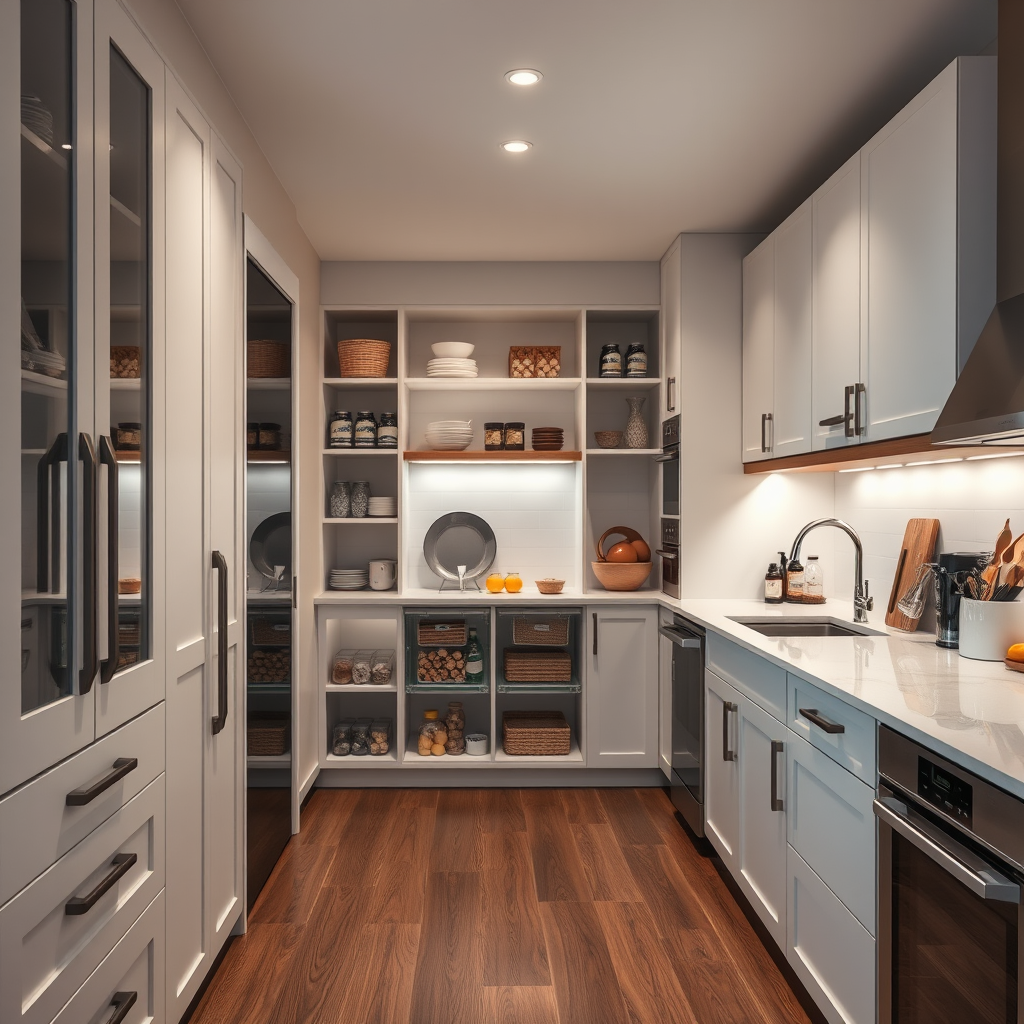
In today’s bustling households, a walk-in kitchen pantry is more than just a luxury—it’s a necessity. Every home chef dreams of a space where ingredients are within reach and neatly organized. But how do you transform your pantry from a chaotic storage space to a streamlined chef’s paradise? Effective walk-in pantry storage ideas can maximize your kitchen functionality, making meal prep quicker and more enjoyable. Whether you are a novice cook or a culinary master, a well-organized pantry can save time, reduce waste, and add a touch of elegance to your cooking environment. Let’s explore some creative storage solutions that will help you maintain this vital space effectively.
Categorize Pantry Staples for Best Use
One of the first steps in organizing your walk-in pantry is categorizing pantry staples. This method not only adds order but also simplifies inventory management. Start by grouping similar items together:
- Dried Goods: Organize grains, cereals, and pasta in airtight containers.
- Baking Essentials: Flour, sugar, and spices should have specific spots to avoid mix-ups.
- Snacks: Use transparent containers for quick access to chips, nuts and cookies.
By compartmentalizing your pantry, you immediately know where each ingredient resides, making meal preparation more efficient.
Optimize Shelf Space with Baskets and Bins
Maximize your pantry’s functionality by using baskets and bins to store various items. This simple addition can help make your pantry visually appealing while ensuring quick and easy access. Different baskets can be used for various categories:
- Store bags of chips or loaves of bread in wire baskets.
- Use labeled bins for cereals and snack bars.
- Designate specific bins or baskets for fruits and vegetables to keep them fresh longer.
Baskets and bins not only make storage easy but allow for better visibility of stored items, reducing the frustration of unearthed expired goods.
Comparison of Shelving Options
When organizing your pantry, the choice of shelving makes a significant difference. Here’s a comparison between two essential shelving options:
| Shelving Option | Advantages | Disadvantages |
|---|---|---|
| Wire Shelving | Cost-effective, Provides visibility, Air circulation | Limited weight capacity, Small items can fall through |
| Wood Shelving | Sturdy, Customizable, Upscale appearance | Higher cost, Requires maintenance (such as resealing) |
Consider these options to find the best fit for your space and budget.
Utilize Door Space for Storage
The back of your pantry door hosts an entire world of possibilities. Door racks and hanging organizers can be installed to hold items such as spices, condiments, or cleaning supplies. This strategy is especially effective for smaller pantries, as it maximizes vertical space often left unused:
- Use over-the-door shoe racks as pockets for small jars or packets.
- Install a magazine rack for placing cutting boards or baking sheets.
- Add hooks for hanging aprons, grocery bags, or utensils.
Leveraging door space creates additional storage without encroaching on main shelving areas.
The Power of Proper Labeling
Efficient labeling is a game-changer in pantry organization. By assigning labels, you can find what you’re looking for at a glance, and family members are more likely to return items to their proper places:
- Use chalkboard labels for easy updates.
- Color-coded labels can distinguish different categories.
- Typed labels provide a clean, uniform look.
With everything clearly marked, you’ll spend less time rummaging and more time enjoying your culinary adventures.
Incorporate Lazy Susans in Corner Spaces
Lazy Susans are an underrated but highly effective solution for utilizing corner spaces in your walk-in pantry:
- Place one on each shelf corner to give easy access to canned goods or spices.
- Store all your favorite sauces or vinegars for easy rotation and selection.
- Prevent products from getting lost in the back of shelves.
A Lazy Susan helps prevent overcrowding and provides better visibility, transforming cumbersome corners into functional spaces.
Divide and Conquer with Drawer Organizers
Don’t neglect pull-out drawers in your pantry. Drawer organizers can transform these into neatly arranged spaces for miscellaneous tools, tea bags, or snacks: Check prices on Amazon
- Divide drawers into sections for better organization.
- Sort smaller items by category to prevent disarray.
- Consider removable inserts for flexible repositioning.
Drawer organizers help maintain cleanliness and are excellent for housing odds and ends that otherwise clutter shelves.
Invest in Stackable Containers
For lasting pantry efficiency, consider investing in stackable containers. These containers maximize storage by ensuring everything fits together neatly like a puzzle:
- Select clear containers to easily monitor supply levels.
- Choose uniform shapes and sizes for seamless stacking.
- Opt for airtight lids to preserve freshness.
Stackable containers bring order and efficiency, ensuring your pantry operates like a well-oiled machine.
Smart Use of Tiered Shelves for Canned Goods
Tiered shelves offer a simple yet sophisticated way to store canned goods in your pantry. They allow cans to be displayed in a stair-like fashion for better visibility and access:
- Arrange by type and expiry to easily manage stock.
- Use them for other jarred goods like salsas or relishes.
- Prevent cans from hiding in the back, reducing waste of expired goods.
With tiered shelves, each item gets its time in the spotlight, facilitating faster meal preparation.
Frequently Asked Questions
How can I maximize small pantry spaces?
Utilize vertical space with stackable shelves and containers. Add hooks and hangers on unused surfaces like doors or sidewalls for additional storage opportunities.
What’s the best way to keep dry goods fresh?
Store dry goods in airtight containers which preserve freshness and prevent contamination from pests.
How often should pantry organization be re-evaluated?
Regularly check your pantry, ideally once a quarter, to maintain order and keep an eye on expiry dates of stored goods.
Can I repurpose furniture for pantry storage?
Yes, items like bookshelves, shoe racks, or even wine holders can be repurposed to creatively solve pantry storage issues.
How important is lighting in a pantry?
Proper lighting is crucial for visibility and accessibility. Consider LED strip lights or motion sensor lights to illuminate dark spots.
What are the benefits of using clear containers?
Clear containers provide visibility, allowing you to see what you have at a glance, reducing waste and helping with inventory.
Should I store spices in the pantry or kitchen drawers?
Store spices in the pantry if it maintains a consistent temperature. However, ensure they are in a cool, dry spot to avoid losing potency.
How do I prevent wasted space in deep pantries?
Use pull-out drawers and Lazy Susans to access the back of shelves easily and effectively.
Final Thoughts
An efficient walk-in pantry is about more than just neatness—it’s about creating a space that supports your lifestyle every day. Whether you’re working with a luxurious vast space or a more compact closet, these strategies will help craft a pantry that’s functional, stylish, and reflective of your culinary aspirations. A decluttered pantry means more streamlined cooking and less stressful living, leaving you more time to enjoy the food you love.
