

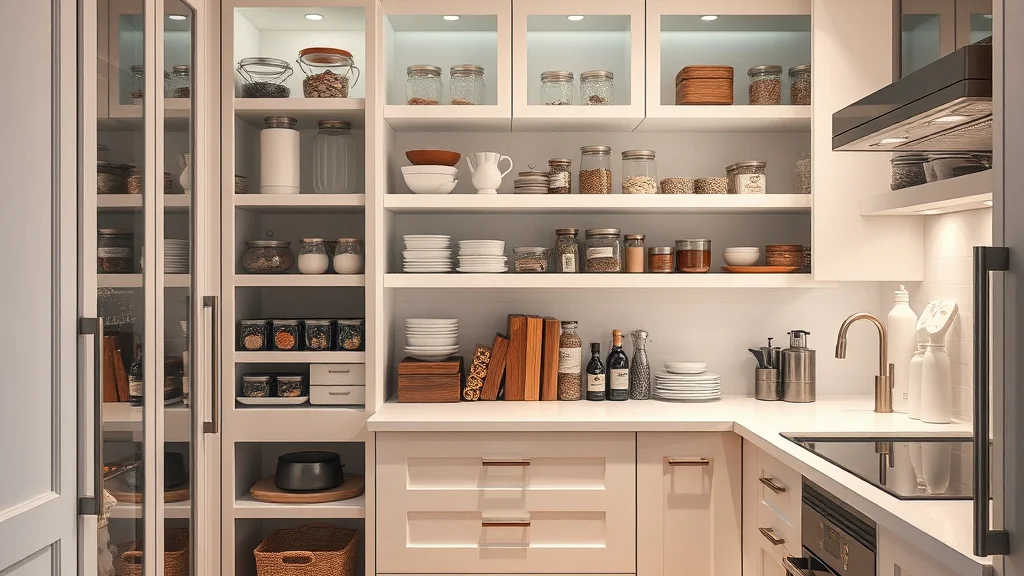
In the realm of home organization, the kitchen often emerges as a focal point, serving as both a culinary workshop and social hub. Amid the hustle and bustle of daily life, a well-organized kitchen pantry can be a game-changer, transforming chaotic spaces into organized oases. The pantry, often overlooked, holds the key to streamlined meal prep and an efficient cooking process. Understanding the principles and tools of pantry organization can significantly enhance your kitchen experience. In this guide, we delve into how to utilize kitchen pantry storage for optimal order and accessibility, unlocking the potential of your pantry with simple yet effective strategies.
The Role of Pantry Organization in Kitchen Efficiency
An organized pantry is more than mere aesthetics; it plays an essential role in promoting efficiency and functionality in the kitchen. Having a systematic pantry allows for:
- Quick access to ingredients which speeds up cooking time.
- Elimination of food waste through better visibility of all items.
- A stress-free culinary environment which inspires creativity.
Investing time in organizing your pantry, therefore, translates to saved time in meal preparation and more enjoyable cooking experiences.
Types of Kitchen Pantry Storage Solutions
When it comes to pantry organization, not all storage solutions are created equal. Two primary options dominate the market:
- Built-In Pantry Cabinets
- Freestanding Pantry Shelves
Each type caters to different needs and spatial configurations, offering distinct advantages and potential drawbacks. Understanding these options helps homeowners make informed choices tailored to their specific kitchen layout and storage requirements.
Built-In Pantry Cabinets vs. Freestanding Pantry Shelves
| Aspect | Built-In Pantry Cabinets | Freestanding Pantry Shelves |
|---|---|---|
| Installation | Typically requires professional installation | Easy DIY setup |
| Flexibility | Limited post-installation flexibility | Highly flexible and portable |
| Cost | Generally more expensive due to custom nature | More budget-friendly option |
| Space Usage | Utilizes space efficiently within existing cabinetry | Requires additional floor space if not built into existing architecture |
| Aesthetics | Seamless integration with kitchen design | Stands out, often less cohesive |
Choosing the Right Pantry Storage for Your Kitchen
Deciding between built-in cabinets and freestanding shelves is integral to effective pantry organization. Consider the following factors when making your choice:
- Kitchen Size: Smaller kitchens benefit from space-efficient, built-in options, while larger kitchens can accommodate freestanding units.
- Budget: Determine how much you’re willing to invest in pantry upgrades, balancing initial costs with potential long-term benefits.
- Style Preferences: Opt for solutions that complement your kitchen’s aesthetic, ensuring design coherence amid functionality.
The Importance of Adjustable Shelving
An adjustable shelving system is a cornerstone of efficient pantry storage. It allows for:
- Customizable space allocation for different-sized containers and products.
- Easy reconfiguration when pantry contents change or expand.
- Maximized vertical space, reducing clutter and improving visibility.
Incorporating adjustable shelves fosters a dynamic pantry arrangement that adapplies to evolving storage needs.
Optimal Product Placement in Your Pantry
Strategic product placement is fundamental to pantry organization. To optimize your layout:
- Place frequently-used items at eye level for quick access.
- Store bulky or heavy items on lower shelves to ensure safety and ease of retrieval.
- Reserve higher shelves for less frequently used or overflow items.
This method of placement not only enhances accessibility but also maintains the aesthetic harmony and practical functionality of your pantry.
Utilizing Containers and Labels
Containers and labels are vital tools for an organized pantry, offering benefits such as:
- Visibility: Clear containers allow for easy identification of contents without opening.
- Space Efficiency: Stackable designs conserve space and improve order.
- Consistency: Labels provide clarity, reducing the guessing game when locating specific items.
Implementing a container and labeling system simplifies inventory management and ensures a streamlined, clutter-free pantry.
Incorporating Advanced Storage Accessories
Innovative storage accessories further refine pantry organization, including:
- Pull-out drawers for deep cabinets, bringing items into view effortlessly.
- Lazy Susans to improve access to frequently-used items on corner shelves.
- Door-mounted racks for spices and small essentials, utilizing underutilized spaces.
Such accessories enhance the functionality of your pantry by maximizing usability and minimizing retrieval time and effort.
Maintaining an Organized Pantry
Consistency is key to sustaining order in your pantry over time. Consider these maintenance strategies:
- Regularly audit pantry contents to eliminate expired or unused items.
- Periodically adjust shelving and storage accessories to accommodate changing needs.
- Revisit and refine organization systems as necessary, ensuring ongoing practicality.
A routine maintenance regime preserves the initial investment of time and resources in setting up a well-organized pantry.
Pantry Organization for a Healthy Lifestyle
Besides improving kitchen aesthetics and efficiency, a systematic pantry fosters healthier eating habits:
- Encourages mindful consumption by showcasing healthy options prominently.
- Facilitates meal planning and preparation, reducing reliance on processed foods.
- Supports dietary goals by segmenting specific, diet-friendly ingredients.
Thus, pantry organization can be an influential factor in nurturing a nutritious, well-balanced lifestyle.
Frequently Asked Questions
How can I organize a small pantry effectively?
Utilize vertical space with stackable shelves, and incorporate pull-out baskets and organizers to maximize every inch.
What are the best types of containers for pantry storage?
Clear, airtight containers are ideal as they maintain food freshness and allow for easy identification of contents.
Why are labels important in a pantry?
Labels streamline ingredient identification, promote easy inventory checks, and ensure a consistent organizational system.
How often should I reorganize my pantry?
At least every six months, or more frequently if your inventory or organization system significantly changes.
What can I do with awkward pantry spaces?
Use custom shelving or specialty storage solutions such as corner and door-mounted racks to utilize every space.
Should I rotate food items in my pantry?
Yes, implement a first-in, first-out system to use older products first and reduce food waste effectively.
How can I prevent my pantry from getting cluttered?
Regularly purge expired or unused items and adjust storage systems as your inventory and needs change.
Is a walk-in pantry better than a built-in cabinet?
It depends on your space availability and needs; both can be effective if organized correctly.
Final Thoughts
An organized pantry serves as the backbone of an efficient kitchen, facilitating meal preparation and promoting healthier eating habits. By carefully selecting appropriate storage solutions, incorporating innovative accessories, and maintaining systematic organization, you transform your pantry from a mere storage area into a well-organized, functional space. Regardless of your kitchen’s size or budget, there are scalable solutions available to enhance your culinary environment. Commit to these effective strategies, and enjoy the rewards of a streamlined kitchen that meets and adapts to your needs.
