

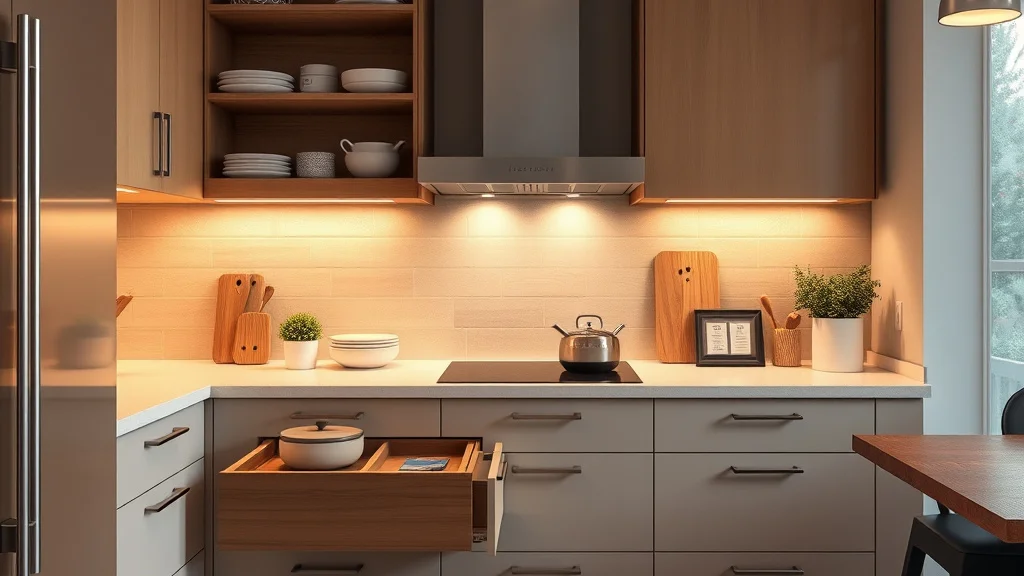
Organizing your kitchen drawers can transform the way you cook, making meal preparation smoother and more enjoyable. An efficient drawer system not only saves time but also reduces stress by always having what you need at your fingertips. Whether you’re an avid home cook or someone just tired of rummaging through cluttered drawers, taking the time to organize your kitchen will surely pay off. This guide provides a step-by-step method to maximize your kitchen drawer space, ensuring that you have a place for everything, and everything is in its place. Let’s dive into the process of converting even the most chaotic kitchen drawers into a masterpiece of organization.
1. Assess Your Current Drawer Situation
The first step in organizing any part of your home is to assess your current situation. Start by taking a close look at your kitchen drawers. Are they overflowing with items? Do you find duplicate gadgets that you never use?
- Empty each drawer completely and lay all items on a large surface, such as your kitchen table or countertop.
- Group similar items together to see how much of each you have. This can include utensils, cooking gadgets, and other kitchen essentials.
- Identify items you use frequently versus those you rarely touch. Be critical during this evaluation process.
This step is fundamental because it allows you to have a clear starting point and sets the stage for sorting and decluttering.
2. Declutter: Decide What Stays and What Goes
After assessing what you have, it’s time to declutter. The aim is to relieve your kitchen drawers of unnecessary weight and clutter.
- Set aside items that are broken, redundant, or never used.
- Consider donating duplicate items or those serving the same purpose, like multiple sets of measuring spoons.
- Keep only the tools that hold utility and bring joy. Remember, the less clutter, the more efficient your drawers will be.
This process of elimination will leave you with a manageable number of items that certainly need organizing but will fit their drawers with ease.
3. Types of Organizers to Consider
Choosing the right organizers is essential for keeping your drawers tidy in the long run. Two popular options for kitchen drawers include adjustable dividers and modular trays.
| Organizer Type | Features | Pros | Cons |
|---|---|---|---|
| Adjustable Dividers | Can be resized to fit any drawer size | Customizable, Flexibility | May shift with heavy use |
| Modular Trays | Pre-arranged compartments | Sturdy, Keeps items contained | Less adaptable, Fixed size |
Choosing between these will depend on your drawer’s dimensions and your personal preference for customization versus preset organization.
4. Measure Your Drawers
Before purchasing organizers, measuring your drawers is critical. Incorrect sizing can lead to ill-fitting organizers that create more clutter than they resolve.
- Measure both the width, depth, and height of each drawer. These dimensions will guide your choice of organizers.
- Consider the overall size of the items to store in terms of their height and length to ensure they fit within the selected organizers.
This step prevents future frustration by ensuring you buy the right size items that integrate smoothly into your drawer space.
5. Plan Your Drawer Layout
With dimensions in hand, plan the layout. Consider what items should be easily accessible.
- Put frequently used items like ladles or spatulas in the top drawers for quick access.
- Less used items can be stored in lower drawers or at the back of the organizers.
- Plan for space to expand in cases where you might add items in the future.
A well-thought-out layout can make even achieving a small miracle of organization possible, maximizing convenience and ease of use.
6. Install Your Organizers
Now comes the exciting part: installing your organizers. This step requires careful placement to ensure stability and accessibility.
- Place dividers according to your planned layout, making sure they’re snug but not too tight.
- If using modular trays, align them to fit the drawer snugly without any empty spaces for things to slide around.
Proper installation helps maintain the organization over time, ensuring that your kitchen drawers remain tidy and structured.
7. Allocate and Arrange Items
It’s time to see your hard work come to fruition as you place items back into the drawers.
- Arrange similar items together, ensuring those used together are stored side-by-side.
- Ensure each item has a designated place, making retrieval easy and intuitive.
Arranging items thoughtfully in the assigned spaces plays an essential part in the long-term sustainability of this organized system.
8. Label Your Drawers
Consider labeling the compartments or drawers to enhance accessibility, especially for households with multiple members.
- Use sticky labels or a label maker for a clean, professional look.
- Labels can guide family members and guests to return items to their rightful places.
While optional, labeling adds a layer of clarity and ensures continued organization over time.
9. Develop Maintenance Habits
To keep your drawers organized, establish simple maintenance habits.
- Regularly reassess your collection and remove items that no longer serve you.
- Spend a few minutes each week—while cooking or cleaning—to return misplaced items to their drawers.
Consistently practicing these habits keeps your kitchen not only neat but functioning optimally for longer.
Frequently Asked Questions
How often should I reorganize my kitchen drawers?
It’s advisable to reassess your kitchen drawers every six months or as needed, to ensure you keep only necessary and frequently used items. Check prices on Amazon
What are some common mistakes to avoid?
Common mistakes include overstuffing drawers, not measuring drawer dimensions before buying organizers, and neglecting regular maintenance.
Can I organize drawers without buying organizers?
Yes, but organizers typically help maintain order and maximize space. You can use temporary items like recycled boxes or DIY dividers.
What’s the best way to store sharp utensils like knives?
For safety, consider using a knife block inside your drawer, or use blade guards in open organizers to minimize the risk of accidental cuts.
How can I maximize drawer space in a small kitchen?
Consider using vertical space wisely, and employ multi-functional tools. Also, replacing bulky items with slim versions can help, as well as decluttering often.
How should I handle seasonal items?
Store seasonal kitchenware in harder-to-reach areas of your drawers or cabinets, bringing them forward when needed
What do I do if I need more storage?
Consider additional shelving or hangers for items outside of drawers. Ceiling or wall-mounted racks can be used for pots, pans, or frequently used utensils.
How do I maintain a clutter-free environment?
Be disciplined in returning items to their rightful places. Regular audits of your kitchen inventory can help deter clutter build-up.
Final Thoughts
Organizing kitchen drawers effectively is not merely a home project, but an ongoing commitment to an efficient and clutter-free kitchen. By following these systematic and practical steps, you can transform chaotic spaces into well-ordered systems, thereby enhancing the functionality and aesthetics of your kitchen environment. With a little effort and the right tools, your kitchen drawers can go from disarray to organized elegance. Remember, the key lies in regular maintenance and the willingness to adapt your system as your kitchen’s needs evolve. Here’s to happy cooking in a well-organized kitchen!
