

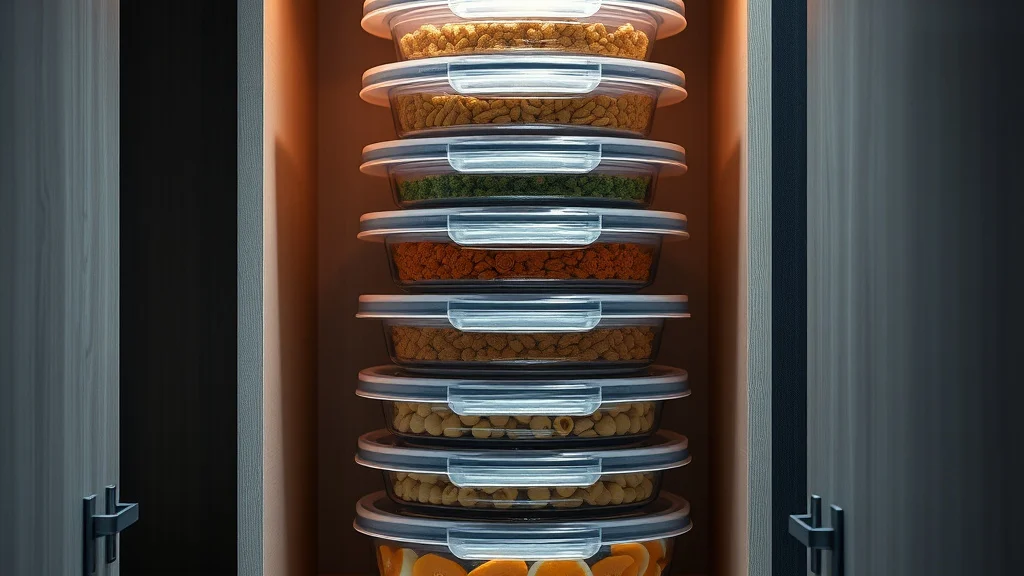
Do you ever find yourself rummaging through a disorganized array of food containers and lids just to find that one matching pair? If the thought of container chaos fills you with dread, you’re not alone. Many of us struggle with kitchen cabinets cluttered with mismatched containers and misplaced lids, turning what should be a simple task into a frustrating ordeal. Whether your kitchen space is vast or compact, efficient organization of food containers and lids can bring a sense of tranquility and efficiency to your daily routine. In this article, we will explore a systematic approach to stacking food containers and lids, ensuring a seamless experience every time you open your cabinet doors. Read on to discover effective strategies and tips for sorting, stacking, and storing food containers to improve both visibility and accessibility in your kitchen cabinets.
Understanding Different Types of Food Container Storage Systems
Before diving into the nitty-gritty of organizing food container storage, it’s important to understand the different types of systems available. Each storage system offers unique benefits and can serve different needs, depending on your space and lifestyle. Two main categories are nested systems and flat systems:
- Nested Systems: Containers are designed to nest into each other, taking up minimal space. However, finding matching lids can sometimes be a hassle.
- Flat Systems: Containers and lids are stored separately, often in bins or racks, making it easier to match pairs but may require more space.
Assess Your Current Collection
Before implementing a new storage system, it’s essential to assess your current collection of food containers. Begin by emptying out your cabinets and laying out all your containers and lids. Discard any containers that are damaged, and get rid of old, warped, or stained pieces that you never use. Match lids to containers and identify any incomplete sets. This process will give you a clear picture of what you have and what might be needed to complete or enhance your collection.
Comparison of Nested Systems and Flat Systems
| System Type | Pros | Cons |
|---|---|---|
| Nested System |
|
|
| Flat System |
|
|
Selecting the Right Storage System for Your Needs
Your choice of storage system will largely depend on both the size of your kitchen cabinets and your personal preference for accessibility versus space efficiency. If your cabinets are small, a nested system might be the best solution. For larger spaces, or if you desire an effortless way of matching containers and lids, a flat system might be more advantageous. Consider your lifestyle and daily needs to choose the system that will make life in the kitchen smoother and more organized.
Using Drawer Inserts and Dividers
Drawer inserts and cabinet dividers can be exceptional tools for organizing your food container collection. These accessories help create designated spaces for lids and containers, reducing clutter and improving visibility. By dividing your drawers or cabinets, you can store lids vertically in one section and containers in another, making it easier to see and access all components. Shop for size-appropriate inserts or customizable dividers that suit the dimensions of your storage areas.
Labelling for Easy Identification
Once all your containers and lids are organized, labeling can further streamline finding what you need quickly. Use a label maker or sticky labels to mark each section of your drawer or cabinet. Clearly identify the type or size of containers stored in each area. If using the flat system, you can even label individual containers and matching lids. This small step can save significant time and frustration when you’re in the midst of cooking and need a specific container.
Regular Maintenance and Decluttering
Maintaining an organized storage system should be part of your regular kitchen cleaning routine. Set aside a few hours every couple of months to reassess your collection. Remove any items that have become damaged or are no longer needed. Regular maintenance helps keep your system efficient and makes using your kitchen a more pleasant experience.
Creative Storage Solutions for Small Spaces
In compact kitchens, every inch of storage counts. Creative solutions such as mounting thin racks on the inside of cabinet doors or using under-shelf baskets can maximize space. Look for products designed specifically for maximizing small spaces or consider DIY options to craft custom storage solutions. In many cases, utilizing vertical space is key to maximizing efficiency.
Leveraging Technology for Organization
In our digital age, technology can even help with organizing food storage systems. Numerous apps can track food storage, give alerts for things to discard, and suggest recipes that incorporate what’s available. Additionally, digital scales and smart labels can further enhance a modern kitchen system. If tech-savvy, integrating some of these conveniences can aid in keeping your cabinet systems organized.
The Role of Aesthetic in Organization
Believe it or not, the aesthetic appeal of your food container organization system can influence how often and effectively you maintain it. Opt for containers that are pleasing to the eye, and use color coordination to help distinguish between types or sizes of containers. Building a system that is both functional and visually appealing will encourage continual maintenance. Check prices on Amazon
Frequently Asked Questions
Is it better to store containers with lids on or off?
Typically, storing containers with lids off is more efficient as it saves space. It also prevents odors from being trapped and allows you to stack more easily.
What should I do if I can’t find matching lids?
It’s a good idea to purchase lids that fit multiple container sizes or to invest in universal lids. Alternatively, replace older containers with a new set that has matching components.
How often should I reorganize my container storage?
Regular maintenance every three months helps keep your system in check. However, personal use will dictate the exact frequency.
Are there any tools to help find the right lid quickly?
Yes, using lid organizers that allow lids to stand upright or inserting dividers in your drawers can make lids easier to access.
Can I use the same organization tips for my freezer storage?
Yes, many of the organizational tactics apply to freezer storage as well. Just ensure containers are freezer-safe, and leave extra room for expansion in liquid-filled ones.
How can I keep my containers odor-free?
Airing out containers regularly and using baking soda to combat odors can help keep containers smelling fresh.
What are some good materials for long-lasting containers?
Glass, BPA-free plastic, and stainless steel are great materials that stand the test of time and do not absorb odors or stains.
Can I stack containers of different shapes?
It’s best to stick with uniform shapes for easier stacking. If you need variety, try to limit the range of shapes to a small number to simplify organization.
Final Thoughts
Organizing food containers and lids doesn’t have to be a daunting task. With strategic planning, the right tools, and regular maintenance, you can create an effortless and visually pleasing system that enhances your kitchen routine. Start by evaluating your current inventory, choose an organization system that meets your unique needs, and build from there. With the guidelines and solutions outlined in this article, you can transform your cabinet chaos into seamless order, saving you both time and stress. Make the change today, and enjoy the benefits of a well-organized, highly functional kitchen space.
