

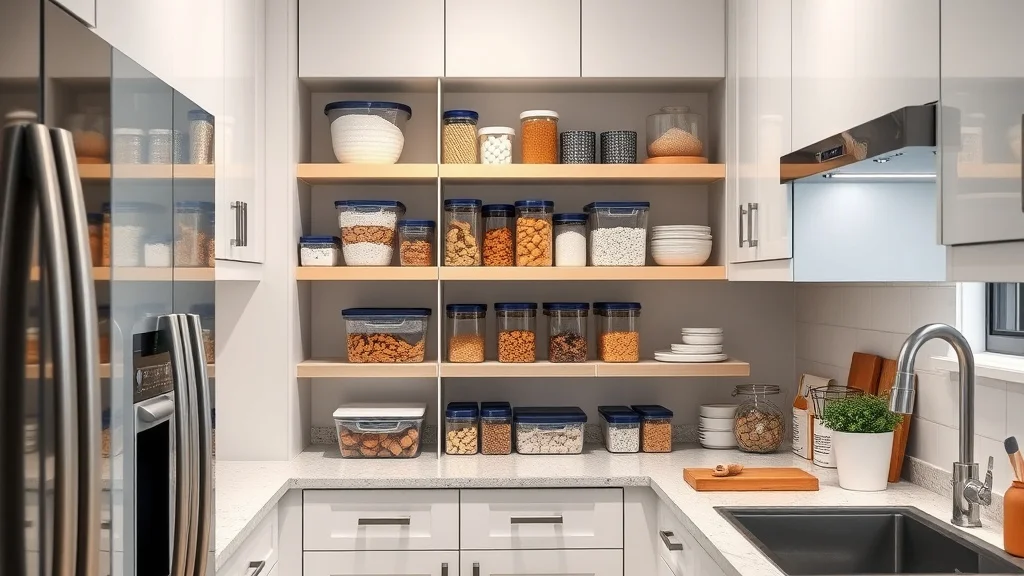
In today’s world, studio living has become a norm for many, offering the convenience of city life with the challenge of limited space. One of the most frequent hurdles faced in such living conditions is the maintenance of a well-organized kitchen. The cornerstone of a functional kitchen, particularly in a studio setting, is its pantry. A disordered pantry not only makes cooking inefficient but also contributes to the clutter of small spaces. Fortunately, there are effective solutions available for maximizing pantry space in a studio kitchen by using suitable containers and organization strategies. This article delves into practical methods for decluttering and enhancing your studio kitchen pantry, by utilizing the right types of containers to maintain order and accessibility.
Embrace Vertical Storage Solutions
When space is at a premium, thinking vertically is key. Vertical storage solutions, like tall shelves and stacked containers, can multiply the available storage area without requiring additional horizontal space. By utilizing the height of your kitchen, you create additional layers of storage which can be incredibly beneficial in a small kitchen pantry.
- Consider installing open shelves up to the ceiling. This not only offers storage but makes the kitchen appear more spacious.
- Use stackable containers to keep items such as cereals, grains, and spices. They help in clearly seeing what’s available and prevent the waste of perishable goods.
- Implement the use of over-the-door racks to store lightweight items like snacks and wraps.
Multi-Purpose Containers
Choosing the right containers with multiple uses can reduce clutter significantly and optimize your pantry’s storage capacity. Multi-purpose containers that can be used for cooking, serving, and storage eliminate the need for separate items and therefore, preserve space.
- Invest in microwave-safe, dishwasher-safe, and stackable containers that can be used to store leftovers as well as pantry items.
- Pick containers that can transition from refrigerator/freezer directly to the microwave, saving time and space.
- Consider collapsible containers which can be flattened when not in use, ensuring they take up minimal space.
Labeling for Easy Access
Implementing a labeling system is a simple yet powerful way to maintain order in your studio kitchen pantry. With clear labeling, you prevent the build-up of clutter and unnecessary purchasing of duplicates.
- Utilize erasable labels or chalkboard labels that allow for easy updates and reusability.
- Organize based on frequency of item use to make cooking more efficient.
- A clear labeling system also aids in quickly taking stock of what needs replenishing, minimizing food wastage.
| Container Type | Pros | Cons |
|---|---|---|
| Glass Containers |
|
|
| Plastic Containers |
|
|
Optimizing Drawer Space
Drawers can be the unsung heroes in a compact kitchen. Maximizing drawer space involves more than just stuffing items in; strategic organization is necessary to exploit their full potential.
- Use drawer dividers to separate items by category, such as lids, utensils, or snack bags.
- Implement small boxes or bins inside drawers to group similar items making it easier to find what you’re looking for quickly.
- Avoid overcrowding by leaving some space for airflow to prevent drawers from becoming sticky or cluttered.
Clear Containers for Visual Clarity
Clear containers are extremely useful in a studio kitchen pantry, as they allow you to see contents at a glance and stock only what you need.
- They make inventory checks straightforward and prevent over-purchasing or forgetting about items stuck at the back.
- Select containers that offer an airtight seal to keep perishables fresher for longer.
- Consider uniform sizes that allow easy stacking, further minimizing wasted space.
Utilize Closed Storage for Aesthetic Harmony
Keeping your pantry visually appealing is crucial, especially in a studio apartment where the kitchen space is often visible from the living room.
- Employ closed cabinets to hide away less frequently used items, keeping visible spaces neat and styled.
- Cupboards with doors give a cleaner, more professional look and can be enhanced with stylish knobs or door handles.
- Maintain a consistent color scheme to provide unity and calmness within your kitchen area.
Implement Rotating Carousels
Rotating carousels can be lifesavers in deep cabinets where items tend to get lost. They provide easy access and ensure every inch of space is utilized.
- Perfect for spices or condiment jars, rotating carousels make it simple to view and reach everything stored on them.
- They can be used in cupboards or in communal shelving to ensure small items don’t get pushed to the back and forgotten.
- Consider two-tiered carousels for even more maximized storage.
Smart Use of Baskets
Baskets offer a charming aesthetic along with practicality in a small studio kitchen. They provide accessible, flexible storage that can suit a range of items.
- Wire baskets can be ideal for fruits and vegetables that require ventilation and are easy to retrieve.
- Choose baskets that fit well on shelves to organize bulkier pantry essentials like sacks of flour or sugar.
- For upper shelves, baskets can corral smaller items which can be difficult to reach or stack.
Portable Carts and Trolleys
In a dynamic studio kitchen environment, having movable storage units can dramatically improve organization and cooking flow. Portable carts and trolleys offer brilliante temporary storage solutions. Check prices on Amazon
- These are perfect for serving as a mini pantry when you lack enough cabinet space.
- Carts can be moved to wherever you need them most, whether it’s closer to the cooking area or stored aside when not in use.
- Consider using them to store pantry staples that require constant replenishing, making them easy to grab and go.
Frequently Asked Questions
What types of containers are best for a small pantry?
For a small pantry, clear, stackable containers are ideal as they save space and make it easy to identify contents.
Is it better to store food in glass or plastic containers?
Both have their benefits: glass is good for long-term storage and is chemical-free while plastic is lighter and often cheaper. Choose based on your needs.
How can I keep my pantry items fresh?
Using airtight containers can help maintain freshness by preventing exposure to air, which can cause products to go stale.
How do I organize a pantry with open shelving?
Group items by category, employ baskets for smaller items, and maintain consistent labeling to keep it attractive and workable.
Are there any recommended brands for pantry containers?
Brands like OXO, Rubbermaid, and Anchor Hocking are highly recommended for durable and efficient pantry solutions.
How should I prioritize items in a small pantry?
Store items that are used most frequently at the front for easy access, and keep lesser-used items towards the back or at higher shelves.
What should I avoid storing in the pantry?
Avoid storing items that could be affected by temperature changes or need refrigeration like some oils and condiments.
How often should I clean and reorganize my pantry?
Regular maintenance checks every 3 to 6 months to remove expired items and reassess organization strategies can help sustain efficiency.
Final Thoughts
Maximizing a studio kitchen’s pantry space involves creative thinking and sometimes a bit of investment in the right tools and containers. By utilizing vertical space, choosing multi-functional containers, and maintaining an orderly system with labeling and strategic organization, you can achieve a clutter-free and functional pantry. While it can seem like a challenge at first, with the right approach, your studio kitchen pantry can become a model of efficiency, making cooking not only possible but enjoyable in a small space.
