

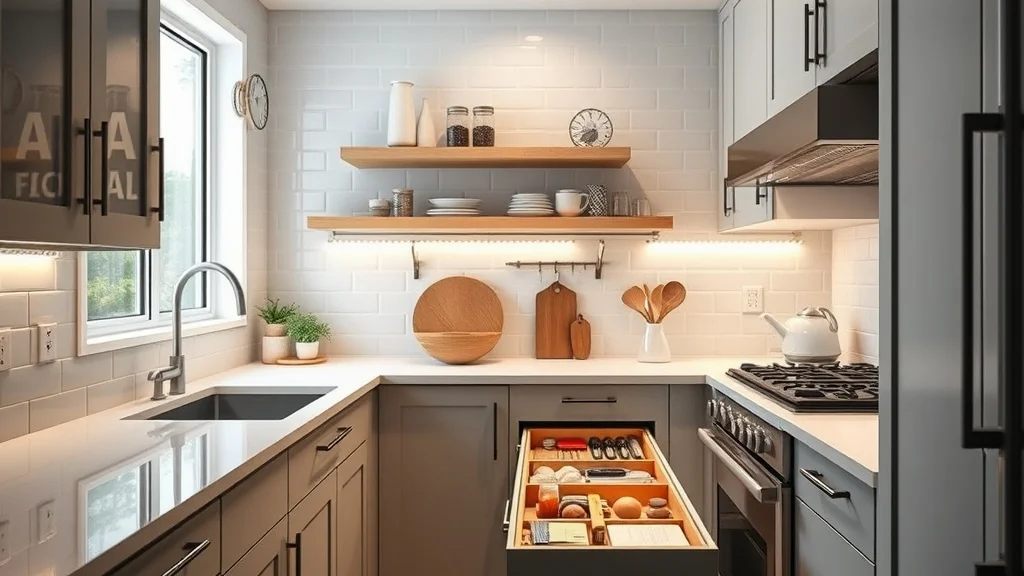
In the hustle and bustle of daily life, the kitchen often serves as the heart of the home. It’s where families gather to cook, share meals, and create cherished memories. However, a disorganized kitchen can transform meal prep into a daunting task. Kitchen drawers, in particular, are prone to becoming cluttered black holes for utensils, gadgets, and miscellaneous items. By adopting effective organizational strategies, your kitchen drawers can become efficient, functional, and visually pleasing spaces. This article delves into a variety of tips and methods to help you master kitchen drawer organization and turn your kitchen into a haven of order.
1. Assess Your Current Drawer Contents
The first step in organizing kitchen drawers is to know exactly what you’re working with. Take the time to go through each drawer and examine its contents. This will help you identify items that are essential, and those that can be removed.
- Empty each drawer completely and clean its surface.
- Group similar items together to see how many you have of each.
- Discard or donate duplicate and non-essential items.
- Take note of frequently used items that need to stay accessible.
Assessing contents helps in planning the layout and storage solutions needed for your kitchen drawers.
2. Prioritize Accessibility
One of the keys to effective kitchen drawer organization is ensuring easy access to essential items. Items used daily should take precedence in terms of reachability.
- Arrange utensils and tools by frequency of use with daily essentials at the forefront.
- Consider the kitchen’s workflow – cooking utensils should be close to the stove.
- Store related tools together, such as knives and cutting boards near prep areas.
- Avoid overcrowding drawers to maintain easy retrieval of items.
Accessibility not only streamlines cooking processes but also reduces frustration during meal prep.
3. The Power of Drawer Dividers
Drawer dividers are indispensable tools for kitchen organization. They prevent mixing and cluttering of items, allowing for structured compartments that cater to different categories of kitchen tools.
- Select adjustable dividers for flexible organization that can adapt to changing needs.
- Use them to separate utensils, cooking gadgets, and miscellaneous items.
- Consider expandable dividers for accommodating larger drawers.
Drawer dividers provide a customizable solution that maximizes the efficiency of drawer space.
| Feature | Adjustable Dividers | Fixed Dividers |
|---|---|---|
| Flexibility | High – Can be resized and reorganized | Low – Static and set in design |
| Installation | Easy – Requires no tools | May require tools and measurements |
| Suitability | Best for varying item sizes | Ideal for specific, consistent item types |
4. Drawer Liners for Style and Protection
Drawer liners are aesthetic yet functional additions to organized kitchen spaces. They protect drawer surfaces and add a pop of color or texture to your kitchen.
- Choose liners that are easy to clean and replace, such as washable or adhesive options.
- Select designs that complement your kitchen decor.
- Ensure tongue-and-groove slots keep the liners in position.
Utilizing drawer liners enhances both the longevity of drawers and the overall kitchen ambience.
5. Use Specialized Organizers
Specialized organizers cater to particular kitchen needs and are tailored to hold specific items confidently and conveniently.
- Knife blocks or magnetic strips keep sharp implements secure.
- Spice organizers transform clutter into a handy cooking resource.
- Bamboo or metal organizers offer eco-friendly and durable options.
The use of specialized organizers addresses individual kitchen preferences and can be customized to vary with needs.
6. Maximize Deep Drawer Potential
Deep drawers provide ample storage but can easily become chaotic without the right strategy.
- Stack plastic containers with lids to optimize use of vertical space.
- Consider pegboard inserts that adjust to different configurations.
- Store pots and pans or bulky items that don’t fit in shallower drawers.
Appropriately organized deep drawers can serve as versatile components of your kitchen storage plan.
7. Label for Organization
Labeling is a crucial step in maintaining an orderly kitchen. It aids in locating utensils quickly and encourages everyone in the household to return items to their assigned spots.
- Use a consistent labeling system with large, clear fonts.
- Consider color coding to categorize areas or drawer sections.
- For reusable solutions, use chalk labels or dry-erase markers.
Labeling not only helps with immediate sorting but increases the longevity of kitchen organizational systems.
8. Tackle the Junk Drawer
Every kitchen has a drawer that becomes a catch-all for miscellaneous items. While often avoided, with attention and strategy, even the junk drawer can be transformed. Check prices on Amazon
- Apply the same sorting and decluttering principles used for utensil drawers.
- Create zones for different categories – mail, spare batteries, small tools, etc.
- Use multi-compartment organizers to maintain order.
A well-managed catch-all drawer will enhance the overall organization of your kitchen.
9. Embrace Vertical Divisions
Vertical storage is a game-changer, especially for flat and long items that might otherwise take up needless horizontal space.
- Implement vertical dividers to store cutting boards, trays, and baking sheets upright.
- Use tension rods or adjustable supports to separate items and prevent tipping.
- Ensure heavier items are placed in lower drawers for easy access and safety.
The use of vertical divisions effectively saves space and streamlines kitchen use.
10. Maintain an Ongoing System
Once your kitchen drawers are perfectly arranged, the next challenge is maintaining that order over time.
- Regularly review the contents of drawers, particularly after every season.
- Teach all household members the organizational system to maintain consistency.
- Adopt a one-in, one-out policy to prevent the accumulation of unnecessary items.
Consistency and frequent assessment are key to sustaining an organized kitchen space.
11. Emphasize Safety and Functionality
Organization isn’t just about aesthetics; it’s also about ensuring your kitchen is a safe space.
- Keep sharp and hazardous tools well-organized and out of the reach of children.
- Use drawer locks or child-proof mechanisms where necessary.
- Ensure that commonly used items are easy to reach to avoid spills and accidents.
By considering safety alongside function, you can create a kitchen that is both beautiful and secure.
Frequently Asked Questions
How do I decide which items go into which drawers?
Group items by their function and frequency of use. Daily utensils should be in easy-access drawers, while less frequently used items can be stored in less accessible spaces.
Can I use kitchen drawer organizers for non-kitchen items?
Yes, kitchen drawer organizers are versatile and can be used for organizing office supplies, jewelry, or even bathroom products.
What is the best material for drawer dividers?
Materials such as bamboo, plastic, and metal offer durability and are easy to clean. Choose based on your preference and the rest of your kitchen aesthetics.
How often should I reorganize my kitchen drawers?
Reorganization should occur at least once a year or seasonally to accommodate changes in need and item inventory.
How can I keep my junk drawer organized?
Use small baskets or boxes within the drawer to separate categories and commit to regular decluttering to avoid buildup.
Should I line all my drawers or just specific ones?
While lining all drawers can provide a uniform look, focus on those that hold dirtier or more fragile items, as they benefit most from the protection provided by liners.
Is it worth custom ordering drawer organizers?
If standard solutions don’t fit your space or needs, custom ordering might be worth the investment to achieve perfect fit and functionality.
How do I handle large, awkward kitchen tools?
Store large tools vertically in deep drawers or on vertical hangings if drawer space is limited, ensuring easy access and organization.
Final Thoughts
A well-organized kitchen drawer system enhances both the functionality and the feel of a kitchen space, helping families enjoy their time and tasks more efficiently. By assessing your needs, utilizing smart storage solutions, and maintaining clear organization systems, your kitchen can become a streamlined workspace. With the tips outlined, you’re well-equipped to tackle even the messiest drawers. Embark on your organization journey today and transform your kitchen into a joyfully ordered oasis.
