

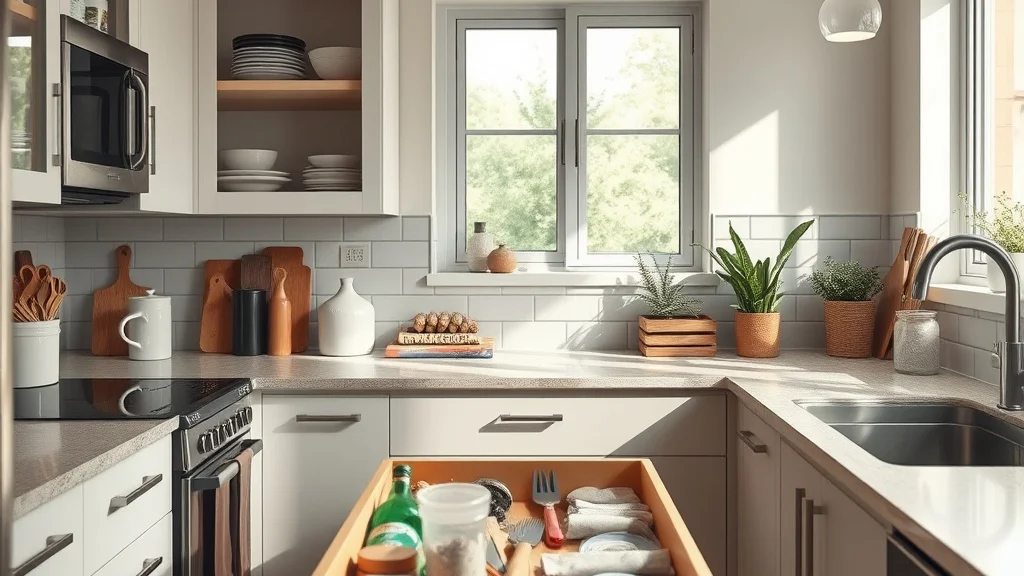
The kitchen junk drawer is a notorious hotspot for clutter in many households. Despite its name, the junk drawer isn’t necessarily filled with junk. Instead, it’s often a catch-all for items that don’t have a designated place. Organizing this space can significantly increase your kitchen’s efficiency, reduce clutter, and alleviate stress. This guide will help you transform your chaotic kitchen junk drawer into a well-organized, functional area.
Understanding the Junk Drawer
The first step in organizing is to understand what a kitchen junk drawer typically contains. It’s usually a mix of everything from batteries, candles, and screwdrivers to old receipts, keys, and small tools. Recognizing the variety of items housed in this drawer is crucial to devising an effective organization plan.
Benefits of Organizing the Junk Drawer
- Improved efficiency in finding items.
- Enhanced aesthetics and reduced clutter.
- Minimized stress from searching for lost items.
Types of Junk Drawer Organizers
There are primarily two types of junk drawer organizers: pre-made and DIY solutions. Choosing the right style depends on your needs, budget, and personal preference. Both options have their pros and cons, which are essential to consider before making a decision.
| Type | Pros | Cons |
|---|---|---|
| Pre-made Organizers | Convenient, Customizable options available | Can be pricey, May not fit perfectly |
| DIY Organizers | Cost-effective, Highly customizable | Time-consuming, Requires creativity |
Steps to Organizing Your Junk Drawer
The following is a step-by-step guide to organize your kitchen junk drawer effectively.
Step 1: Empty and Assess
The first step is to empty the drawer completely. Once everything is out, assess each item. Ask yourself whether it belongs in the junk drawer. Common items include:
- Batteries
- Small tools
- Keys
- Rubber bands
Step 2: Sort Items by Category
Sorting items into categories is essential. Group similar items together such as:
- Tools: screwdrivers, pliers
- Stationery: pens, notepads
- Miscellaneous: rubber bands, paper clips
Step 3: Declutter and Discard
Remove items that are unnecessary or broken. Discarding these items frees up space for those that are truly needed. Be ruthless in your sorting to ensure only useful items remain.
Step 4: Determine Drawer Layout
Once you’ve decluttered, determine how you want the drawer to be laid out. Consider size and frequency of use for each category.
Step 5: Select and Install an Organizer
Choose between pre-made and DIY organizers. Ensure that it suits the dimensions of your drawer and accommodates your sorted categories effectively.
Step 6: Place Items in Organizer
Carefully place items back into the drawer, using the organizer. Ensure every item has its own place, making it easy to find later.
Regular Maintenance
To maintain an organized drawer, schedule regular check-ups. Weekly or monthly maintenance can prevent clutter from accumulating again.
Use Visuals for Easy Access
Labels can aid in maintaining organization. Label each section of your organizer clearly to help you remember where each item belongs. Check prices on Amazon
Frequently Asked Questions
How often should I organize my junk drawer?
Organizing every three to six months is advisable to prevent clutter build-up.
Is it better to buy or DIY organizers?
It depends on your budget and preference. DIY is cost-effective whereas pre-made organizers offer convenience.
What are essential items to keep in a junk drawer?
Essential items might include batteries, small tools, notepads, and pens.
Should I label the sections of the organizer?
Yes, labeling can help maintain order and make it easier to find items.
How do I deal with accumulated papers?
Sort through immediately, keep important documents, and discard the rest.
What if my drawer is always full?
Consider revising the contents and eliminate non-essential items to free up space.
Are there kid-friendly organizing solutions?
Yes, opt for organizers with rounded edges and compartments for stationery and small toys.
Can I use my junk drawer for storing spices?
Designate spices to a separate drawer to prevent cross-clutter. A spice rack can also be a useful investment.
Final Thoughts
An organized kitchen junk drawer not only enhances your kitchen’s functionality but also brings peace of mind. By implementing the strategies and tips outlined in this guide, you’ll transform your chaotic drawer into a well-organized space where each item is easily accessible and everything has its rightful place.
