
The heart of a well-organized kitchen often lies in its pantry. Whether you are a seasoned chef or a busy parent, maximizing your pantry’s efficiency can significantly enhance your culinary adventures. One of the most effective ways to organize a pantry is through the use of stackable pantry bins on pull-out drawers. These ingenious solutions not only help in categorizing your supplies but also make access easy and swift. But to achieve seamless organization, knowing the correct measurements and options for stackable pantry bins is crucial. This article aims to provide you with a comprehensive guide to effectively measure and select the right stackable bins for your pantry pull-out drawers, ensuring space optimization and clutter-free storage.
Comparison of Plastic and Metal Stackable Bins
| Feature | Plastic Stackable Bins | Metal Stackable Bins |
|---|---|---|
| Durability | Moderate, lightweight but can break if overburdened | High, generally sturdier than plastic |
| Weight | Lightweight | Heavier due to metal construction |
| Visibility | Often transparent, providing clear visibility of contents | Limited visibility unless designed with mesh structure |
| Cost | More affordable | Higher cost due to material |
| Style Options | Variety of colors and styles available | Few styles, often industrial or modern in appearance |
Understanding Pull-Out Drawer Dimensions
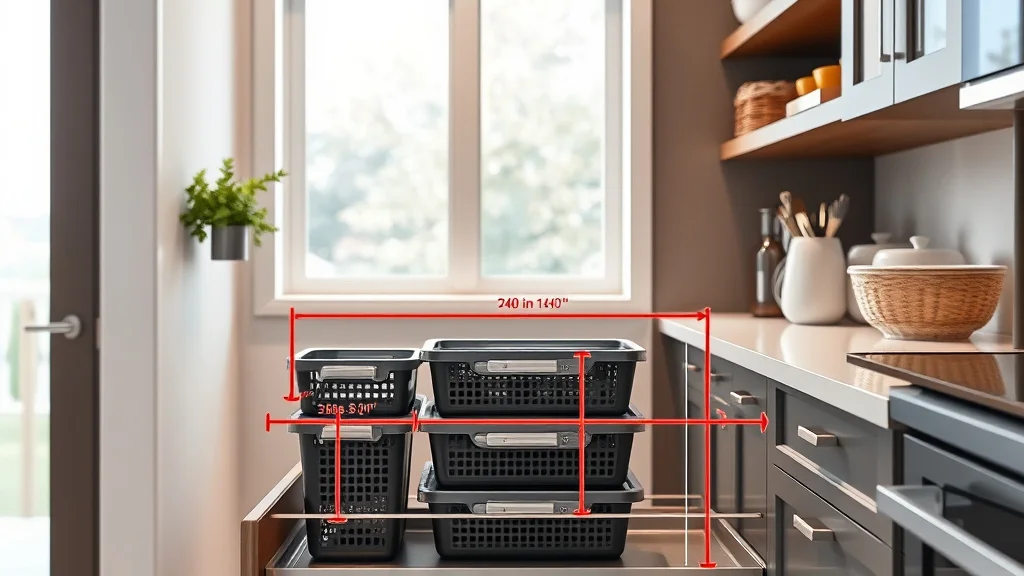
Before you dive into choosing the perfect pantry bin, it is essential to measure the pull-out drawer accurately. Begin by measuring the width, depth, and height of your drawer. These dimensions will serve as the basis for selecting suitable bins. Ensure you consider the drawer’s internal dimensions, subtracting any potential obstructions like drawer rails or lip.
Importance of Material Selection
The choice of material for stackable bins can influence longevity and user experience. Generally, plastic bins offer a cost-effective solution for lightweight items, while metal bins cater to those requiring a sturdier structure. Consider the weight of items you’ll store when selecting a material, balancing cost against durability.
Advantages of Stackable Pantry Bins
Stackable bins optimize vertical space, making them ideal for compact areas. By stacking bins, you can increase storage capacity without expanding the drawer’s footprint. This space-efficient design allows you to categorize foods and ingredients, creating an organized pantry with easy access.
Choosing the Right Size Stackable Bins
Selecting the correct bin size requires careful assessment of your pantry items’ volume and dimensions. Consider the typical packaging size for the snacks and ingredients you frequently buy. Choose a mix of smaller and larger bins to accommodate varying sizes, ensuring each item has a designated home.
Maximizing Visibility and Accessibility
Full visibility and easy access are key tenets of an organized pantry. Transparent bins allow a clear view of contents, avoiding unnecessary rummaging. Labels can be added to the front of bins for additional clarity, detailing contents or expiration dates, contributing to efficiency during meal prep.
Utilizing Adjustable Dividers
Some stackable bins come with adjustable dividers, allowing further customization. These dividers enable segmentation of larger bins into smaller compartments, perfect for keeping similar items grouped together without mixing them. It’s an excellent solution for portion-controlled snacks or separating different kinds of grains.
Weight Limitations Considerations
Each bin has a maximum weight limit, which should not be exceeded to prevent damage. Be mindful of these limitations when stacking heavier items. For bulky ingredients, use individual bins or the lower decks instead of stacking vertically to avoid any strain on the material and overall stability.
Integrating Color Coding Systems
Incorporating a color coding system can further streamline pantry organization. Assign colors to specific categories, such as snacks, baking supplies, and cereals. This not only adds visual appeal but simplifies locating and restocking items, particularly in households with children.
Maintaining Your Stackable Bins
Regular maintenance ensures a hygienic and efficient pantry. Cleaning the bins periodically prevents contamination from spills. Use soap and water for plastic bins, while metal bins may require a soft cloth to avoid scratches. Regular inspection for wear and tear will preserve your bins’ integrity and functional lifespan.
Avoiding Over-stacking
While stackable bins are efficient, over-stacking can lead to instability. Limit stacking to a practical height, enabling easy accessibility to each layer. Heavier items should always occupy the bottom layers, maintaining balance and avoiding topple over risks. Check prices on Amazon
Embracing Flexibility in Organization
While stackable bins offer an organized framework, flexibility in organization is crucial. Periodically reassess your pantry layout to cater to changing needs or item stock variations. Having the adaptability to modify bin positions or sizes allows fluid transitions, maintaining a clutter-free environment.
Frequently Asked Questions
What size pantry bins should I use for a pull-out drawer?
It depends on your drawer dimensions and the items you plan to store. Measure your drawer carefully to select the right size bins.
Are plastic or metal bins better for pantry organization?
Both have their pros and cons. Plastic bins are lightweight and affordable, while metal bins are durable and sturdy.
How do I prevent my pantry bins from tipping over?
Avoid over-stacking, and always place heavier items on the lower part of the stack to maintain stability.
Should I label my pantry bins?
Yes, labeling improves organization by helping you easily identify contents, especially with non-transparent bins.
Can stackable bins fit in any pantry?
Stackable bins can fit in most pantries as long as you choose the correct size based on your drawer measurements.
How often should I clean my pantry bins?
Clean your pantry bins regularly, at least once a month, to maintain hygiene and prevent contamination.
What is the best way to organize kids’ snacks in pantry bins?
Consider using smaller, labeled bins for portion-controlled snacks and position them within reach for children.
Are stackable bins safe for storing perishables?
They can be used for non-refrigerated perishables. Ensure correct labeling and rotate items based on expiration dates to maintain freshness.
Final Thoughts
Stackable pantry bins, when correctly measured and implemented, are a game-changer for household organization. They offer dynamic solutions for various storage needs while maintaining a tidy and efficient pantry space. By understanding dimensions, material options, and maintenance strategies, you can tailor your organization system to suit your lifestyle and pantry constraints. Embrace flexibility, and don’t hesitate to periodically tweak your approach to align with evolving storage requirements. Ultimately, the goal is a seamless, organized pantry that enhances everyday convenience, sustains freshness, and optimizes storage capacity.
