
In the heart of every home lies the kitchen, a space bustling with both functionality and warmth. A well-organized kitchen not only increases efficiency but also adds to the aesthetic appeal of the home. Among the myriad organization solutions available, shelving racks stand out for their versatility and space-saving attributes. Catering to different needs, preferences, and kitchen designs, shelving racks can significantly transform the way you utilize your kitchen space. This article explores the best shelving rack options, installation methods, and styling tips to make your kitchen both functional and stylish.
Understanding Shelving Racks: An Overview
Shelving racks are an indispensable component of kitchen organization. They come in a variety of sizes, materials, and designs, allowing homeowners to customize their storage solutions. Whether you’re aiming to declutter work surfaces or showcase your finest china, shelving racks offer an efficient way to keep kitchen essentials tidy and accessible. The two primary types of shelving racks are fixed shelving and adjustable shelving, each with unique benefits.
Benefits of Using Shelving Racks
- Space Optimization: Shelving racks help in maximizing vertical space, making them ideal for small kitchens.
- Accessibility: Everything is in plain sight, which reduces the time spent searching for items.
- Customization: With endless choices in materials and styles, they can be customized to fit any kitchen decor.
- Flexibility: Shelving racks can be relocated and repurposed with ease, making them a flexible storage solution.
Types of Shelving Racks
Primarily, kitchen shelving racks can be classified into two categories: wall-mounted shelving racks and freestanding shelving racks. Each type brings distinct advantages, catering to different space constraints and storage needs.
Wall-Mounted vs. Freestanding: A Comparative Analysis
| Aspect | Wall-Mounted Shelving Racks | Freestanding Shelving Racks |
|---|---|---|
| Space Utilization | Uses vertical wall space | Occupies floor space |
| Mobility | Fixed, less portable | Portable, easy to relocate |
| Installation | Requires wall drilling | No installation needed |
| Flexibility | Limited to fixed arrangements | Adjustable shelves available |
| Cost | Generally less expensive | Varies, often more costly |
Wall-Mounted Shelving Racks: Making the Most of Vertical Space
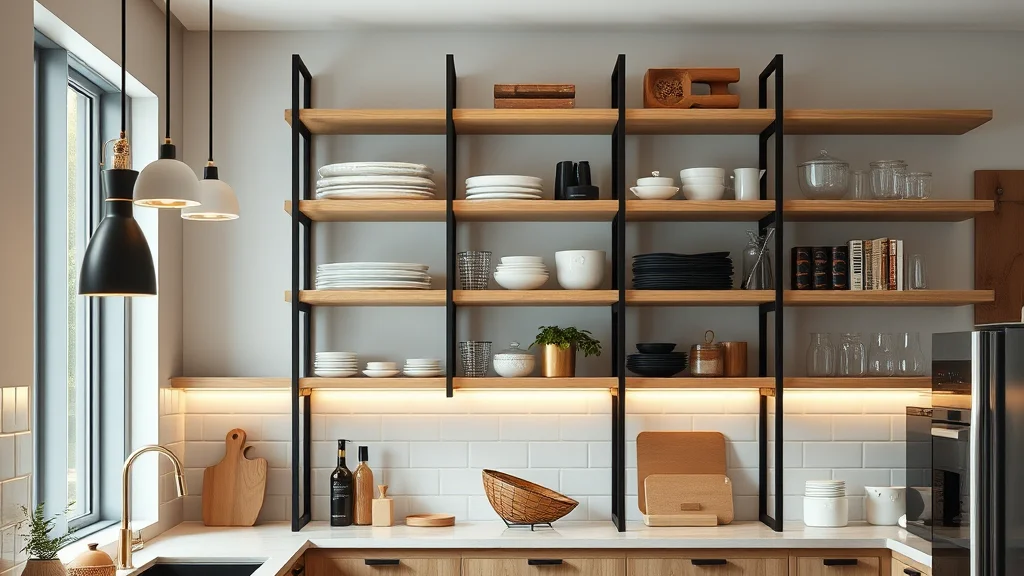
Wall-mounted shelving racks are ideal for kitchens with limited floor space, offering a vertical storage solution that frees up countertops. These racks can be strategically placed near cooking and preparation areas to keep essentials within arm’s reach. They are perfect for storing dishware, spices, and any cookware you reach for regularly.
Freestanding Shelving Racks: Versatility at Its Best
Freestanding shelving offers unmatched flexibility as it can be easily moved and rearranged according to your needs. These racks are perfect for kitchen essentials that require periodic access, as well as for setting up a portable pantry or a makeshift island. Choosing a model with adjustable shelves can further enhance its usability and adaptability.
Materials: Choosing the Right Look and Functionality
When selecting shelving racks, material choice plays a crucial role in both longevity and aesthetic appeal. Common materials include:
- Metal: Often found in industrial or modern kitchens, metal is durable and provides a sleek look.
- Wood: Provides a warm, classic feel and is ideal for traditional kitchens.
- Glass: Tempered glass shelves offer a contemporary touch, though they require careful maintenance to keep them spotless.
Installation Tips for Wall-Mounted Shelving Racks
Installing wall-mounted shelving requires careful planning to ensure safety and effectiveness. Consider the following tips:
- Choose walls that are capable of bearing weight; studs and solid walls are ideal.
- Ensure shelves are level during installation for even weight distribution.
- Opt for brackets or mounts that suit the shelf material and expected load.
Organizing Spices and Condiments
Spices and condiments are essential for any kitchen but can often become cluttered. Use shelving racks to display these items neatly. Consider keeping them on narrow, wall-mounted shelves near the cooking area where they can be easily accessed. Arrange them alphabetically or by frequency of use to streamline your cooking process.
Dishware and Utensil Display Ideas
Displaying dishware and utensils on open shelves can serve both functional and decorative purposes. Arrange plates and bowls by color or design for a cohesive look. Use stylish containers for utensils and group similar items together for a pleasing visual effect. This approach also makes it easier to grab what you need quickly.
Utilizing Corner Spaces
Often overlooked, corner spaces provide an excellent opportunity for shelving racks. L-shaped or angled shelves can make efficient use of corner areas, allowing for storage of less frequently used items like large pots or baking supplies. These shelves can help declutter counter space and make your kitchen look more orderly. Check prices on Amazon
Maintaining Your Shelving Racks
Regular maintenance is key to extending the life of your shelving racks. Periodically dust and clean the shelves, paying close attention to joints and corners. For metal shelves, a protective coat can prevent rust. Wooden shelves may need occasional resealing or polishing to maintain their finish.
Frequently Asked Questions
What is the best material for kitchen shelving racks?
The best material depends on your aesthetic preferences and practical needs. Metal is durable and has an industrial look, wood offers a warm, classic appearance, and glass provides a modern, sleek option.
Can I install wall-mounted shelves on drywall?
Yes, but you should ensure they are mounted into studs or use appropriate anchors to support the weight of the shelves and their contents.
How can I prevent my shelving racks from becoming cluttered?
Regularly declutter and reorganize items on your shelves. Only store frequently used items on the most accessible shelves and use containers or baskets to group smaller items together.
Are freestanding shelving racks stable?
Freestanding shelving racks can be very stable if assembled correctly. For added stability, some models come with anti-tip brackets that can be secured to the wall.
Can shelving racks support heavy kitchen equipment?
It depends on the material and how well the shelves are installed. Metal and solid wood shelves typically support more weight compared to glass or particleboard.
How do I choose the right size for a shelving rack?
Measure the available space in your kitchen, including the distance to adjacent cabinets and counters. Consider what you’ll be storing and choose a size that accommodates those items comfortably without overfilling the shelf.
Are shelving racks easy to move?
Freestanding racks are generally easy to move around, while wall-mounted racks require uninstallation. If mobility is a concern, consider portable racks with wheels.
How do I maintain glass shelving racks?
Use a glass cleaner to keep them streak-free. Ensure that they are securely installed to prevent any tipping risks, and avoid placing heavy objects on them.
Final Thoughts
Integrating shelving racks into your kitchen is an effective way to streamline storage and enhance accessibility. By carefully choosing between wall-mounted and freestanding options, selecting appropriate materials, and organizing with intention, you can create a kitchen space that is both functional and visually appealing. Whether you are aiming for a minimalist setup or a vibrant display, shelving racks offer countless possibilities to express your style while optimizing your culinary space. Remember that regular maintenance and strategic organization will keep your kitchen tidy and a joy to use.
