

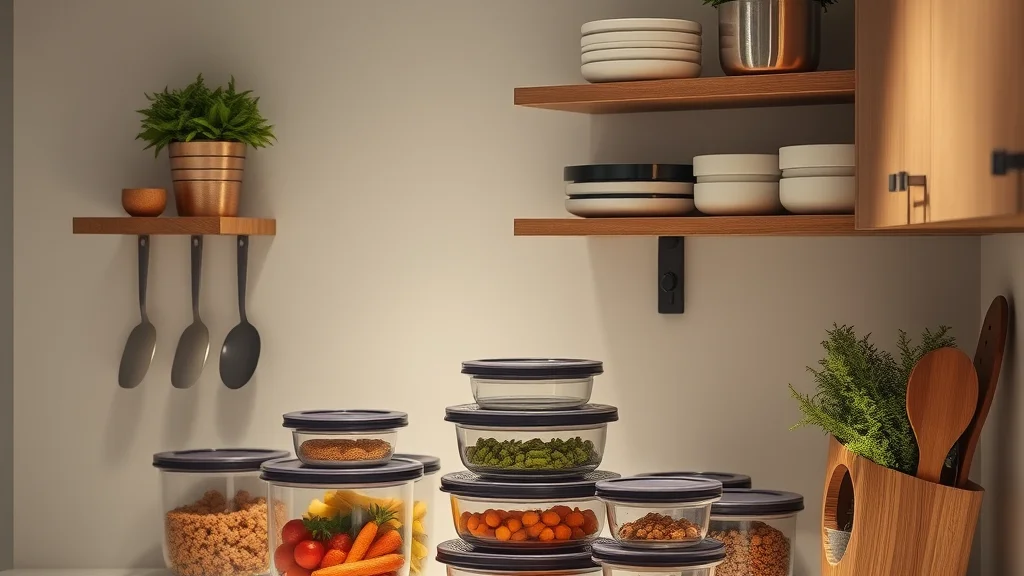
In modern homes, kitchens are the heart of the household, where families gather, meals are crafted, and memories are made. However, maintaining order amidst an abundance of kitchen items, particularly Tupperware, can be a daunting task. With various sizes and shapes, Tupperware can rapidly create clutter, turning meal preparation into a frustration rather than a joy. This article aims to guide you through an array of kitchen storage solutions that will transform your space into a model of efficiency and ease. These solutions not only simplify your kitchen organization but also infuse a sense of calm, allowing you to focus on what truly matters: family time and culinary creativity.
Understanding Your Space
Before diving into specific storage solutions, it’s essential to evaluate the space you’re working with. Consider the dimensions of your kitchen cabinets and drawers as well as the types of Tupperware you own. A clear understanding of your space will help you make informed decisions on the types of storage solutions to implement. Evaluate how often you cook and how much of your Tupperware you truly use. This initial assessment is crucial to ensure that the solutions you choose are tailored to your specific needs and not merely aesthetic enhancements.
Standard Shelving vs. Custom Cabinet Organizers
Two primary options exist when thinking about storing Tupperware efficiently: standard shelving and custom cabinet organizers. Both have their pros and cons, and selecting between the two will largely depend on your kitchen’s setup and personal preference.
| Feature | Standard Shelving | Custom Cabinet Organizers |
|---|---|---|
| Cost | Generally lower cost | More expensive due to customization |
| Flexibility | Limited to available shelf space | Highly customizable to fit your needs |
| Ease of Installation | Simple to install | May require professional installation |
| Space Utilization | Typically less efficient | Optimizes space usage effectively |
Drawer Dividers for Lids and Bases
A simple yet effective solution for Tupperware organization is using drawer dividers. These dividers help in neatly separating lids from containers and keeping everything organized by size and type. By dedicating a particular drawer solely for lids, you can easily access them without the usual hassle of rummaging through a pile of mismatched pieces.
- Purchase adjustable drawer dividers for flexibility.
- Label sections within the drawer for easier identification.
- Use dividers with non-slip surfaces to prevent movement.
Vertical Lid Storage Racks
If drawers are scarce or unavailable, consider investing in vertical lid storage racks. These fit inside cabinets and allow you to store lids upright. This method not only saves space but also limits the time spent searching for matching lids. By aligning lids vertically, you eliminate stacking, thus reducing clutter.
- Place racks in easily accessible cabinets near your work area.
- Choose adjustable racks to accommodate lids of different sizes.
- Opt for racks made of durable, easy-to-clean materials.
Maximizing Under-Sink Space
Under-sink areas are often overlooked, yet they can offer significant storage potential. Though traditionally reserved for cleaning supplies, these spaces can accommodate Tupperware if organized smartly. Consider installing pull-out shelves or an extendable rod to maximize vertical storage. Utilize this area for seldom-used containers, playing to its less convenient access.
- Use waterproof containers to avoid damage from potential leaks.
- Label baskets or bins for seasonal items or special cookware.
- Install a tension rod across the cabinet to hang cleaning sprays.
Lazy Susans for Corner Cabinets
Corner cabinets are notorious for wasted space, making lazy Susans a brilliant addition. These rotating trays provide easy access to Tupperware stored deep in cabinets. By simply spinning the tray, you can reach items tucked away without having to rearrange the entire cabinet.
- Choose a size based on your cabinet’s dimensions.
- Lazy Susans with anti-slip surfaces are less prone to sliding.
- Utilize tall, stackable containers to make the most of vertical space.
Transparent Bins for Better Visibility
Using transparent bins is an excellent strategy for maintaining order and visibility. These bins help categorize items by type or usage frequency, allowing you to quickly locate what you need. This approach also makes it easier for other family members to navigate the kitchen, fostering a collaborative and stress-free environment.
- Label bins to ensure everyone knows where items belong.
- Stack bins to maximize vertical space in pantry closets.
- Choose bins with handles for easy access and transport.
Over-Door Racks for Extra Storage
Capitalizing on often-unused space, over-door racks are versatile and transform kitchen cabinets into additional storage areas. Ideal for lightweight Tupperware items, these racks create more room and prevent overcrowding within cabinets.
- Consider the weight capacity of the rack before installation.
- Use these racks for storing lids, sponges, or small towels.
- Ensure that the racks do not obstruct the door’s ability to close fully.
Under-Shelf Basket Integration
Tapped into the vertical space of a cabinet, under-shelf baskets provide new storage dimensions. These baskets effortlessly slide onto a shelf, allowing quick storage of Tupperware items that might otherwise clutter countertops. They are ideal for keeping lids separated from their bases.
- Prioritize removable and adjustable options for cleaning ease.
- Use baskets treated for moisture resistance, especially near sinks.
- Choose mesh designs to offer natural ventilation and visibility.
Foldable Container Solutions
For those struggling with limited space, foldable containers present an ingenious solution. These collapsible items provide flexibility, as they grow with food quantity but shrink significantly once emptied. While not traditional Tupperware, they function superbly in conserving precious cabinet space. Check prices on Amazon
- Look for high-quality, durable materials to withstand repeated use.
- Consider containers with airtight seals to maintain freshness.
- Ensure that all components are dishwasher safe for easy cleaning.
Magnetic Storage for Light Items
Magnets offer a unique, out-of-the-box solution for storing lightweight Tupperware items, adding a playful twist to organization. Magnetic strips can be installed on walls or underneath cabinets, perfect for holding small metal-lidded containers.
- Choose magnets with strong adhesion for larger surfaces.
- Avoid overloading – consider weight limits to prevent accidents.
- This method is perfect for spice jars or mini Tupperware storages.
Frequently Asked Questions
Can I mix different types of Tupperware?
Indeed, mixing is possible but less preferred as stacking efficiency and access can be compromised. Stick to similar shapes and sizes whenever feasible for optimal storage.
Are all Tupperware pieces dishwasher safe?
Most modern Tupperware pieces are dishwasher safe; however, always refer to the manufacturer’s guidelines as heat may warp lids over time.
What is the best way to prevent Tupperware from odors?
Ensure that containers are thoroughly dried before storing them with lids ajar. Every few uses, clean with a mixture of vinegar and baking soda to eliminate persistent scents.
How frequently should my Tupperware be reorganized?
Reorganizing quarterly ensures efficiency is maintained and provides the opportunity to declutter unused items.
Do all organizers work for irregularly shaped containers?
Some storage solutions cater specifically to irregular shapes, such as adjustable dividers or custom organizers tailored by professional services.
How do I clean Tupperware with tough stains?
Stains can often be removed by soaking containers in a baking soda and water solution overnight, then washing as usual in the morning.
Should I buy Tupperware with a lifetime warranty?
Investing in Tupperware with a lifetime warranty is wise, ensuring durability and replacement for manufacturing defects.
How can I identify BPA-free Tupperware?
Most BPA-free Tupperware will indicate this in the packaging or will be identified with recycling code #5 (polypropylene or PP).
Final Thoughts
Organizing your kitchen with efficient Tupperware storage solutions doesn’t have to be a daunting task. By implementing these strategies, you can enjoy a clutter-free kitchen where every piece has its place, making your cooking experience seamless and enjoyable. Remember, the key lies in understanding your needs and choosing solutions that suit your lifestyle best. As the heart of the home, your kitchen deserves the care and attention that supports its role in your daily life, fostering family connections and encouraging culinary exploration.
