

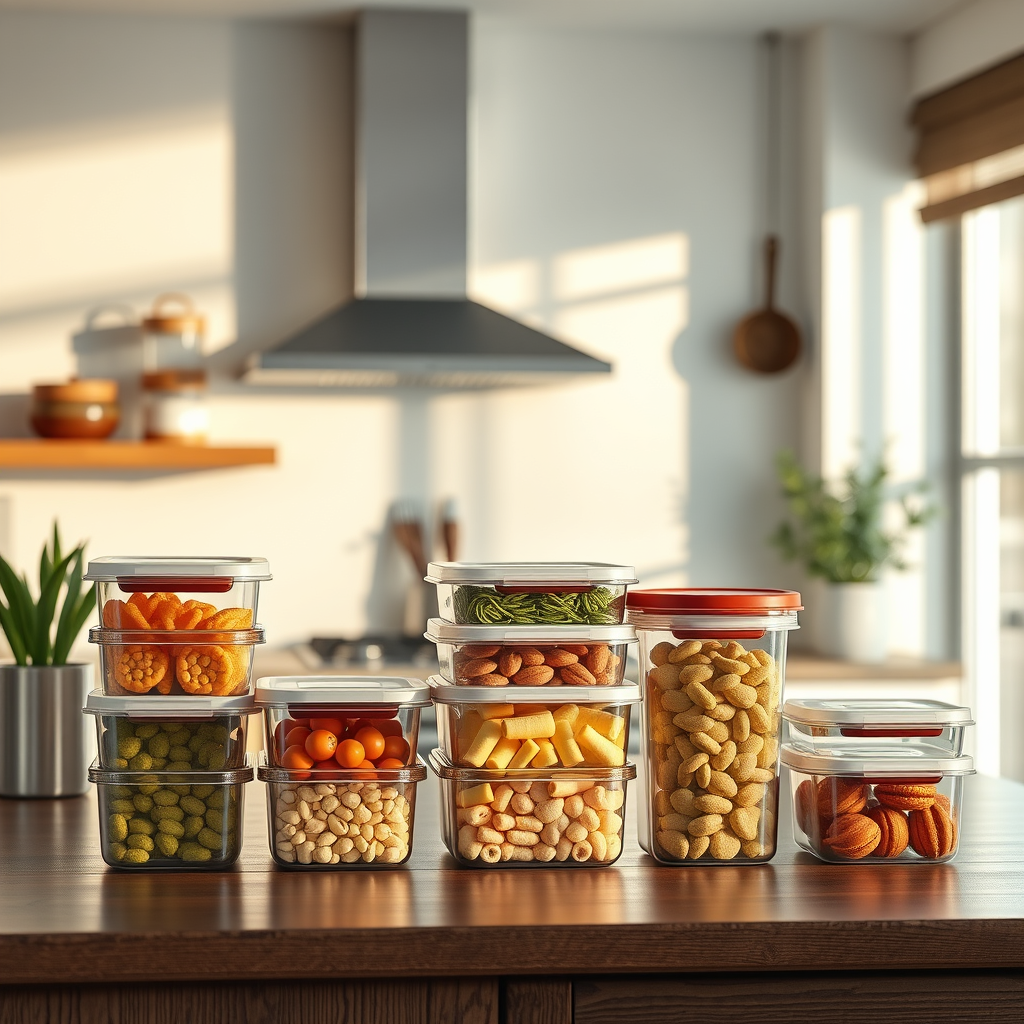
In every home, the kitchen stands as one of the most dynamic spaces. It’s a meeting point for family gatherings, a place for culinary creativity, and for many, the heart of the home. However, with all this activity, it can also become a cluttered and chaotic environment. This is where kitchen organization, particularly using plastic food storage containers, becomes essential. Not only do they help in organizing your pantry and refrigerator, but they also prolong the freshness of your food, leading to less waste and more savings. Whether you’re dealing with a spacious kitchen or maneuvering around a compact space, effective use of food storage containers can transform your kitchen into a tidy, efficient, and visually pleasing environment.
Types of Plastic Food Storage Containers
When it comes to selecting the right plastic storage containers for your kitchen, it’s crucial to be informed about the various options available. Primarily, plastic food containers come in two main types: disposable and reusable. Each has its advantages and potential drawbacks, and the best choice depends on your specific needs and lifestyle.
- Disposable Storage Containers: These are often used for short-term food storage. They are convenient, often coming in bulk, and can be discarded after use. However, they are not as environmentally friendly since they contribute to plastic waste.
- Reusable Storage Containers: Made from more durable plastic materials, these are meant for long-term use. They are cost-effective over time and environmentally conscious. While they may come with a higher initial cost, their ability to withstand multiple uses makes them a sustainable choice for many households.
Why Reusability and Sustainability Matter
Sustainability has become a pivotal consideration in modern kitchens. By choosing reusable plastic food storage containers, households not only benefit economically but also contribute positively to the environment. Reusable containers reduce the need for single-use plastics, aligning with the growing demand for more sustainable living practices.
- Reusable containers are constructed from more durable materials that last longer, reducing the frequency of replacements needed.
- They often feature secure sealing technology, retaining food freshness and minimizing waste.
- Investing in high-quality reusable containers can lead to significant cost savings over time.
Comparison: Disposable vs Reusable Containers
| Feature | Disposable Containers | Reusable Containers |
|---|---|---|
| Cost | Low initial cost, higher long-term cost | Higher initial cost, lower long-term cost |
| Environmental Impact | High | Low |
| Durability | Low | High |
| Use Frequency | Single-use | Multi-use |
| Food Freshness | Standard | Enhanced |
Choosing the Right Container Size
The size of plastic storage containers is a crucial aspect to consider, as it directly affects your kitchen organization. Using containers of the appropriate size can save valuable space and ensure efficiency.
- For meal prep and leftovers, medium to large containers are ideal. They offer enough space to store sizable portions without overcrowding your refrigerator.
- Smaller containers are perfect for snacks, sauces, and dressing. They can fit neatly into small spaces, such as narrow refrigerator shelves or drawers.
- Consider nesting container sets that offer various sizes stacked within each other—saving space when not in use.
Maximizing Space Efficiency with Stackable Containers
One of the standout features of well-designed plastic food storage containers is their ability to stack neatly. This is particularly beneficial for kitchens with limited storage space. Stackable containers provide the following advantages:
- They contribute to a clean and organized look by minimizing clutter.
- Stacking allows for better utilization of vertical storage space, freeing up room in cabinets and on shelves.
- They can be arranged in a way that maximizes accessibility, making it easier to grab what you need without disturbing the organization system.
The Importance of an Airtight Seal
An airtight seal is essential for preserving the freshness of stored food. It prevents air from entering the container, which can lead to spoilage and contamination. Here’s why it’s important:
- It keeps food fresh longer by slowing down the oxidation process.
- Prevents odor transfer between the container’s contents and other foods in the fridge or pantry.
- Reduces the chance of leakage during storage and transportation.
Understanding Different Lid Types
Not all containers come with the same types of lids, and choosing the right lid can make a big difference in everyday usability:
- Snap-On Lids: These are common and easy to use, providing a secure seal with a simple push. They are ideal for ensuring a snug fit.
- Screw-On Lids: Offer a tighter seal, making them great for liquids or foods with high moisture content.
- Flip-Top Lids: Convenient for quick access, they are suitable for dry goods like cereals or nuts where you might need frequent access.
Budget-Friendly Kitchen Organization Tips
Organizing your kitchen doesn’t have to break the bank. Here are some budget-friendly tips to consider:
- Reuse old containers where possible. For example, jars from sauces or pickles can be cleaned and repurposed for storing dry goods.
- Look for bulk deals or discounts on sets of containers, possibly during sales or promotions.
- Invest in quality containers that will last longer rather than cheaper, less durable options.
The Role of Plastic Containers in Meal Prep
Plastic storage containers are invaluable tools for those who regularly meal prep. Their versatility and convenience ensure they contribute to a smoother cooking process:
- Allows for the quick and organized storage of ingredients before cooking.
- Facilitates portion control, helping maintain dietary goals by pre-measuring and storing individual meals.
- Supports a busy lifestyle with ready-to-go meals that only need reheating, saving time.
Maintenance Tips for Longevity
To ensure your plastic food storage containers last as long as possible, proper care and maintenance are crucial:
- Clean them promptly after use to prevent stains and odors from setting in. Warm soapy water or a gentle vinegar solution works well.
- Avoid high-heat environments such as microwaves or dishwashers unless the container is specifically noted as microwave/dishwasher-safe.
- Store them with lids loosely attached to allow air circulation and prevent odors from developing while in storage.
Efficient Ways to Store Your Containers
An organized storage method makes it easy to find the container you need when you need it:
- Store containers nested within each other, but keep the lids vertically arranged in a file sorter or dish rack for easy access.
- Consider labeling your containers with size or contents, making it easier to spot the one you need at a glance.
- If space allows, dedicate a specific cupboard, drawer, or shelf just for your plastic food storage containers.
Frequently Asked Questions
Are plastic food containers safe to use in the microwave?
Most plastic food containers are safe for microwave use if they are labeled as microwave-safe. It’s essential to check this before using them to avoid risks of melting or chemical leaching. Check prices on Amazon
How can I prevent my plastic food containers from staining?
Rinsing the container with cold water before placing in food that typically causes stains, like tomato sauce, can help reduce staining. Using a mild bleach solution periodically can also help remove stubborn stains.
Is it okay to freeze food in plastic containers?
Yes, as long as the containers are marked as freezer-safe. These are usually designed to withstand cold temperatures and prevent cracking or warping.
Can plastic containers harbor bacteria?
Plastic containers can harbor bacteria if not cleaned properly. Ensure they are thoroughly washed and dried before storing them to prevent bacteria growth.
Should I discard containers that have scratches?
It’s advisable to discard heavily scratched plastic containers since scratches can harbor bacteria and compromise the container’s durability and functionality.
How can I ensure my lids are secure?
Ensure lids are properly aligned with the containers and check them for wear over time. Snap-on lids should click securely, while screw-on lids should close snugly without gaps.
Are there eco-friendly alternatives to plastic containers?
Yes, alternatives include glass or stainless steel containers, which are highly durable and environmentally friendly. Although more expensive upfront, they provide a sustainable solution over time.
Why do plastic containers sometimes retain odors?
Plastic is porous, meaning it can absorb odors from strong-smelling foods. Regular cleaning with baking soda or vinegar and storing in a cool, airy place can help mitigate this issue.
Final Thoughts
Plastic food storage containers are indispensable tools in modern kitchens, offering organization and efficiency. By choosing the right type and using them effectively, you can transform your kitchen space, ensure your food stays fresh, and contribute positively to a sustainable environment. Embrace smart strategies such as utilizing stackable containers, selecting the appropriate sizes, and incorporating budget-friendly organization tips to maximize the benefits of your storage solutions. With thoughtful approaches and a commitment to maintenance, your kitchen can thrive as a functional and harmonious space.
