

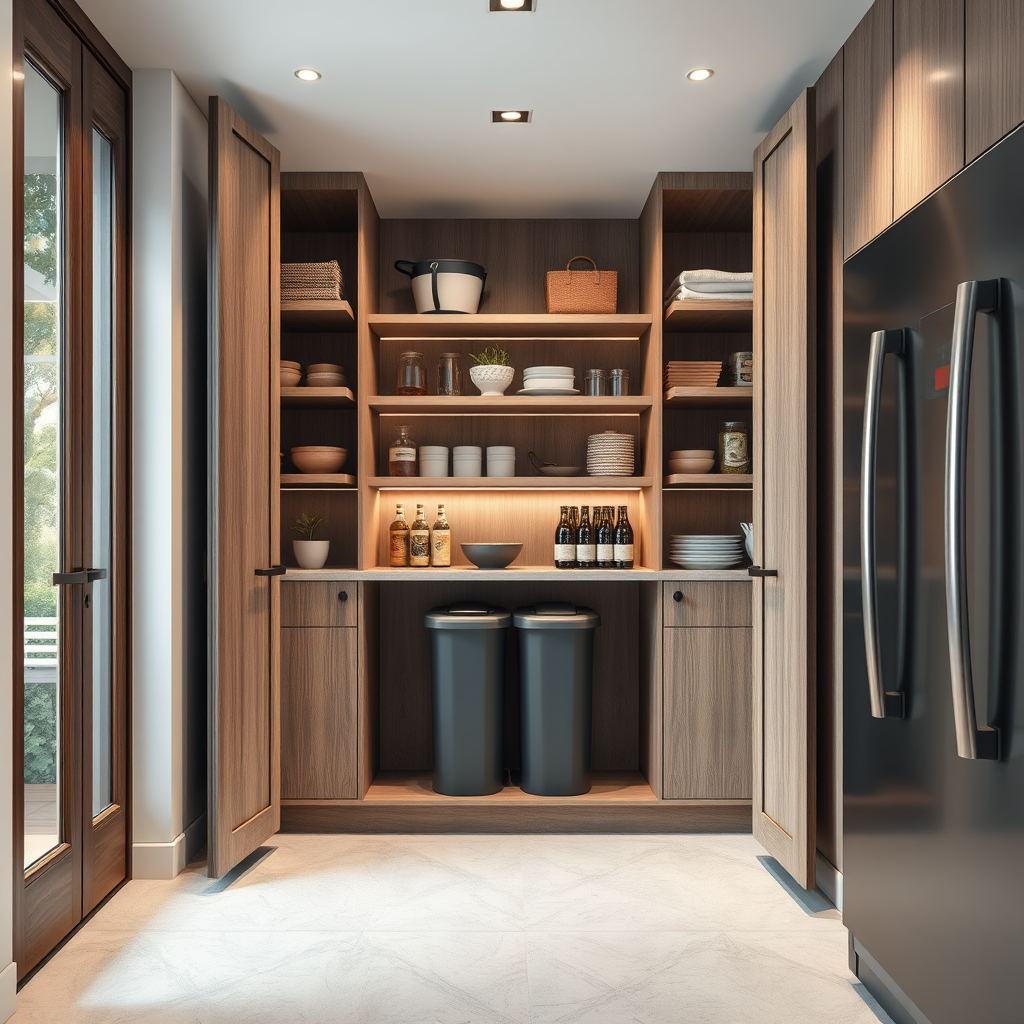
The kitchen pantry is often the heart of any home. It’s where ingredients for hearty meals are stored, where snacks await their moment, and where family staples find their place. However, a cluttered pantry can lead to frustration and inefficiency. One of the most overlooked aspects of pantry organization is trash can storage. A miscellaneous bin shoved into a corner lacks thought but can be easily streamlined into your pantry design, saving both space and stress. Here, we’ll explore how integrating trash can storage into your pantry can optimize your kitchen space. We’ll also delve into better pantry staples storage strategies for creating a seamless and efficient culinary environment. Whether you’re renovating or tweaking your pantry’s organization, these insights will help you make the most of this vital kitchen area.
Reevaluating Your Pantry Layout
The first step in optimizing trash can storage in your pantry is to reevaluate its overall layout. Begin by assessing what your pantry holds, taking note of items you use frequently versus those you don’t. Consider removing outdated products and items you no longer need. Once you’ve purged the unnecessary clutter, think about how best to categorize the remaining items.
- Utilize vertical space: Install additional shelving to take advantage of ceiling height for rarely used item storage.
- Zones: Organize your pantry into zones such as baking, breakfast, canned goods, etc.
- Accessibility: Keep everyday items at eye level and high-use items within easy reach.
Keep in mind that effective pantry layout also lays the groundwork for strategic trash can storage leverage.
Integrating Trash Can Storage
Integrating a trash can into your pantry design requires strategic thinking. An ideal trash can storage solution strikes a balance between accessibility and aesthetics. Here are a few considerations:
- Built-in Trash Cabinets: Many modern pantries feature built-in cabinets that can easily conceal a trash can, keeping it out of sight but readily accessible.
- Pull-out Trash Bins: These are convenient for compact pantries. They can be installed under the counter or on a designated lower shelf.
Each approach comes with its own set of benefits that we will discuss in more detail below.
Comparison of Trash Can Storage Options
To better understand which trash can storage solution might be right for you, refer to the table below that outlines two main types of storage solutions.
| Solution | Advantages | Disadvantages |
|---|---|---|
| Built-in Trash Cabinets |
|
|
| Pull-out Trash Bins |
|
|
Maximizing Shelf Space
Proper organization of your pantry shelves allows you to create more space and improve accessibility. Here are strategies to get the most out of your shelf space:
- Use clear bins or baskets to group similar items together and label them clearly for easy identification.
- Consider adjustable shelving, which provides flexibility as your storage needs shift.
- Utilize shelf risers to create levels and double your usable space practically and efficiently.
This not only helps with clear organization but ensures that every item has a designated spot, aiding in a cleaner and tidier pantry.
Adopting Efficient Storage Habits
Efficient storage habits are the cornerstone of a well-organized pantry. Cultivating these habits can often lay the foundation for maintaining order in the long term:
- Regular Clean-outs: Schedule quarterly audits of your pantry to discard expired items and reorganize.
- First In, First Out (FIFO): Place newer items at the back of the shelf and older items upfront to ensure older products are used up before expiration.
- Dedicated Trash Days: Assign specific days to empty the pantry trash to prevent overflow and bad odors.
These small, consistent efforts will ensure that your pantry stays organized and functional.
Streamlining Snack Storage
Snacks are pantry staples that can quickly cause chaos if not stored properly. Here are smart solutions for keeping snack storage under control:
- Designate a specific shelf or section in your pantry for snacks to prevent them from becoming mixed with other items.
- Invest in stackable containers that are easy to reach and refill.
- Reserve lower shelves for snacks to allow children to easily access their choices without climbing or knocking over other items.
Proper snack organization not only simplifies snacking but also acts as a preventative measure against over-purchasing.
Utilizing Door Space
The back of a pantry door is often wasted space that can be turned into valuable storage with the right solutions:
- Over-the-Door Racks: Great for holding small items such as spices, condiments, or jars.
- Magnetic Boards: A magnetic board for quick notes, grocery lists, or even holding small magnetic spice jars can be useful.
Making use of door space not only saves shelf space but also makes an ideal spot for frequently used items.
Segregating by Meal Type
An innovative approach to pantry organization is to segregate items by meal type. This method enhances meal prep efficiency:
- Breakfast Zone: Stock with cereals, oatmeal, and spreads.
- Dinner Preparations: Store pasta, rice, canned tomatoes, and sauces together.
- Snack Center: A place for chips, nuts, and easy-to-grab items.
This type of organization leads to an easier, stress-free cooking experience.
Organizing Canned Goods
Canned goods are pantry staples but can quickly become cumbersome to store due to their weight and size. Here are some tips for tackling them:
- Can Racks: Invest in stackable can racks or rotatable storage systems to keep everything visible and neat.
- Labeling: Use labels to sort and easily identify types. Group similar cans like soups, vegetables, and fruits together.
These changes ensure a streamline pantry, allowing for quick access to canned goods when you need them.
Check prices on Amazon
Proper Maintenance Practices
After you’ve set up the perfect pantry, proper maintenance is essential to keep it functioning optimally:
- Weekly Quick-Tidy: Spend five minutes at the end or start of each week to spot tidy and reset misplaced items.
- Monthly Inspection: Take it one step further monthly by checking for expired items and organizing miscategorized goods.
- Seasonal Overhaul: As seasons change, so do pantry needs. Schedule seasonally-based adjustments to accommodate different dietary needs or preferences.
Regular maintenance reduces the likelihood of falling into disarray and ensures you maintain a well-organized space.
Frequently Asked Questions
How much does it cost to build a custom pantry with a trash cabinet?
The cost can vary widely based on materials, size, and whether you hire professionals. Expect to spend anywhere from $500 to $2,000+ for custom built-ins.
Can I install a pull-out trash bin myself?
Yes, many pull-out bin systems are designed for DIY installation and come with detailed instructions.
How do I prevent trash odors in the pantry?
Utilize odor-controlling trash bags and ensure your trash bin has a tightly sealed lid. Regularly take out trash and clean the bin.
Are there any eco-friendly trash can options?
Yes, consider bins made from recycled materials or those designed to facilitate recycling and composting.
What’s the best way to organize a small pantry?
Maximize vertical space, use door racks, incorporate pull-out bins, and avoid overstocking.
Can I use a regular trash can for composting in the pantry?
Yes, as long as it has a secure lid to prevent odors and pests. Consider ventilation options and regular emptying.
What types of trash bags are best to use?
Opt for durable bags with drawstring closures for ease of use and to better contain odors.
How regularly should I clean my pantry?
Spot checks weekly with thorough cleaning monthly or seasonally is advisable to maintain a clean and functional space.
Final Thoughts
A well-organized pantry with thoughtful trash can integration not only enhances kitchen aesthetics but also improves efficiency in food preparation and waste management. By reassessing your pantry layout, strategically incorporating trash can storage, and fostering sustainable storage habits, you transform your kitchen into an organized, stress-free space. With these tips and insights in hand, you are now equipped to revitalize your pantry, making it functional and harmonious with your needs.
